© Classical Numismatic Group, Inc.
© Classical Numismatic Group, Inc.
Diobol 530 BC - 470 BC
| Silver | 2.11 g | 13 mm |
| Issuer | Miletos (Ionia) |
|---|---|
| Type | Standard circulation coin |
| Years | 530 BC - 470 BC |
| Value | 2 Obols (⅓) |
| Currency | Drachm |
| Composition | Silver |
| Weight | 2.11 g |
| Diameter | 13 mm |
| Shape | Round (irregular) |
| Technique | Hammered |
| Demonetized | Yes |
| Updated | 2024-10-10 |
| Numista | N#272881 |
|---|---|
| Rarity index | 97% |
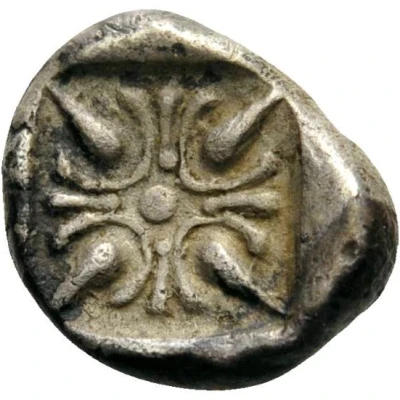
Reverse
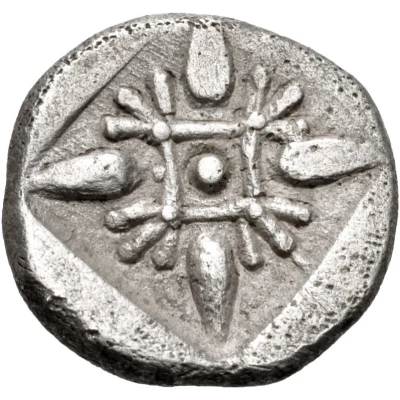
Stellate pattern within incuse square
Comment
Late 6th-early 5th century BCInteresting fact
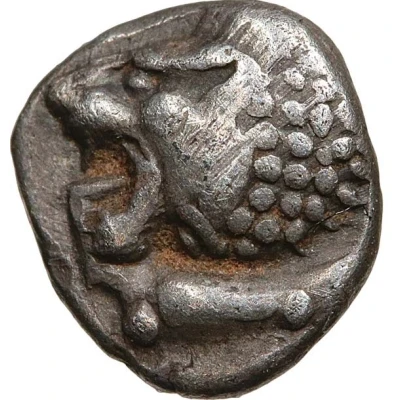
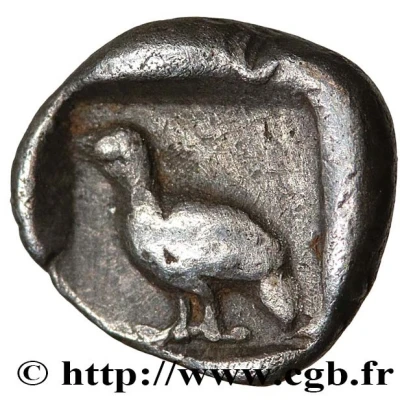
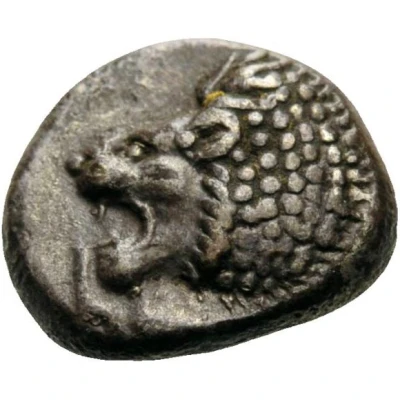
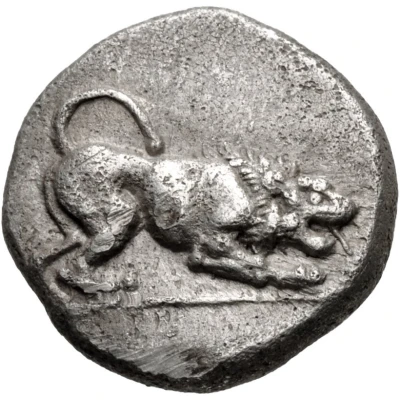
The Diobol coin from Miletos (Ionia) was used as a form of currency in ancient Greece and has a unique design. One interesting fact about this coin is that it features a lion's head on one side and an incuse punch on the other, which was a common design element in ancient Greek coins. The lion's head symbolized the power and strength of the city-state of Miletos, while the incuse punch was used to create a distinctive mark on the coin, making it easier to authenticate. This coin is a rare and valuable artifact that provides insight into the economic and cultural practices of ancient Greece.