© Nomos AG
© Nomos AG
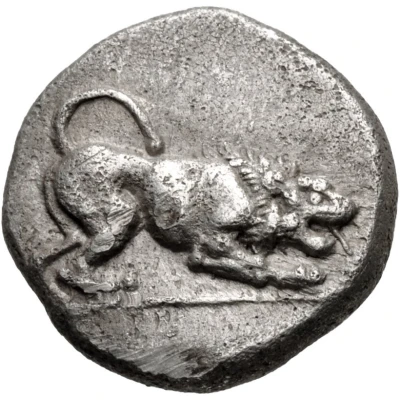
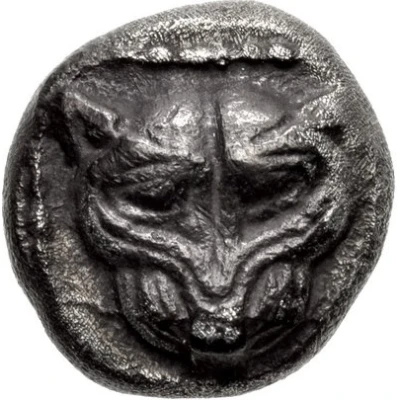
Diobol 525 BC - 475 BC
| Silver | 1.2 g | 10.0 mm |
| Issuer | Miletos (Ionia) |
|---|---|
| Type | Standard circulation coin |
| Years | 525 BC - 475 BC |
| Value | 2 Obols (⅓) |
| Currency | Drachm |
| Composition | Silver |
| Weight | 1.2 g |
| Diameter | 10.0 mm |
| Shape | Round (irregular) |
| Technique | Hammered, Incuse |
| Orientation | Variable alignment ↺ |
| Demonetized | Yes |
| Updated | 2024-10-10 |
| Numista | N#186052 |
|---|---|
| Rarity index | 70% |
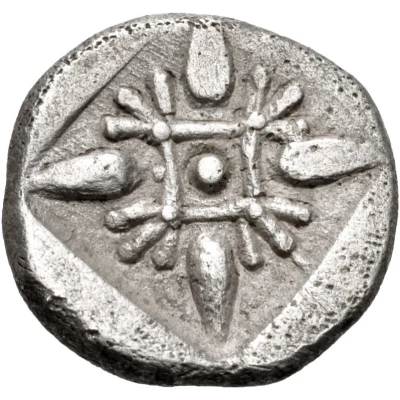
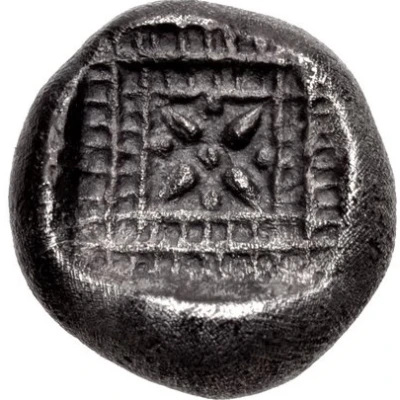
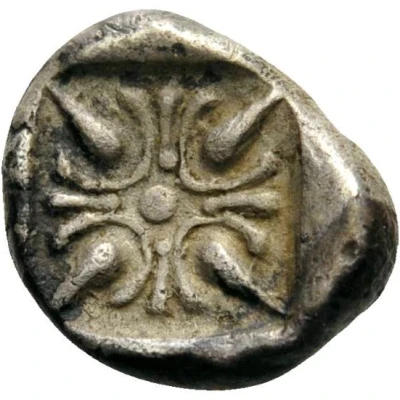
Reverse
Star-shaped floral ornament within incuse square
Comment
Sometimes listed as 1⁄12 Stater
Interesting fact
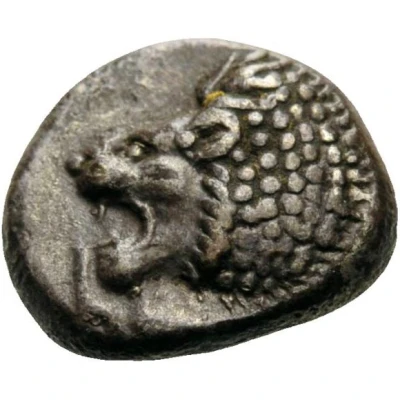
The Diobol coin from Miletos (Ionia) was used as a form of currency in ancient Greece and has a unique design. One interesting fact about this coin is that it features a lion's head on one side and an incuse punch on the other, which was a common design element in ancient Greek coins. The lion's head symbolized the power and strength of the city-state of Miletos, while the incuse punch was used to create a distinctive pattern on the coin's surface. This coin is a rare and valuable artifact that provides insight into the economic and cultural practices of ancient Greece.
Price
| Date | Mintage | VG | F | VF | XF | AU | UNC |
|---|---|---|---|---|---|---|---|
| ND (525 BC - 475 BC) | - | - | - | - | - | - |
Values in the table are based on evaluations by sales realized on Internet platforms. They serve as an indication only for Diobol (525 BC - 475 BC) coin.