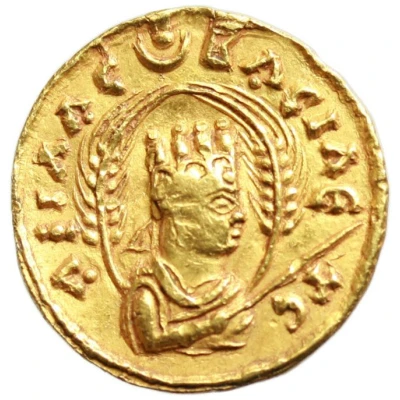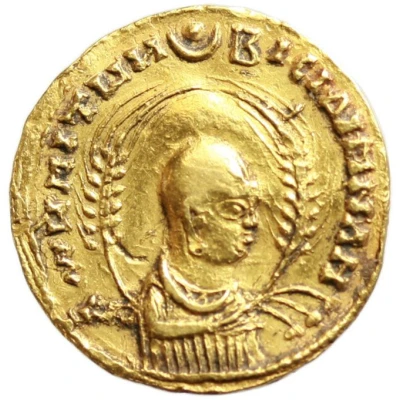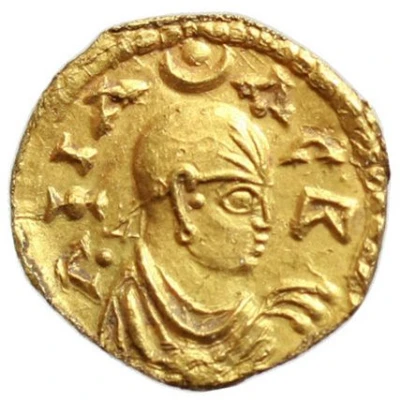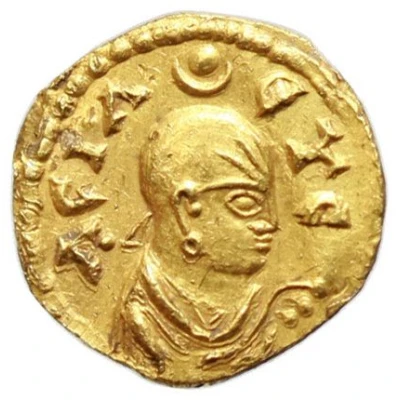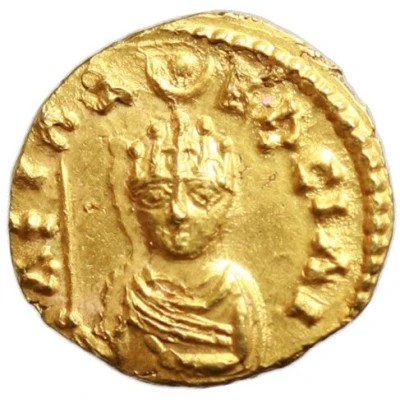
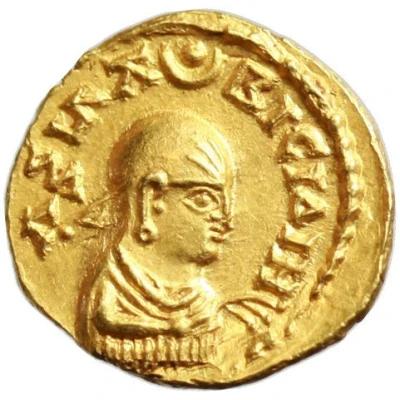
© The Heberden Coin Room, Ashmolean Museum, University of Oxford
© The Heberden Coin Room, Ashmolean Museum, University of Oxford
½ Ꜹ Unit - Aphilas
| Gold (.900) | 1.41 g | 12.00 mm |
| Issuer | Aksum |
|---|---|
| King | Aphilas (circa 305-315) |
| Type | Standard circulation coin |
| Years | 305-315 |
| Composition | Gold (.900) |
| Weight | 1.41 g |
| Diameter | 12.00 mm |
| Thickness | 2.00 mm |
| Shape | Round (irregular) |
| Technique | Hammered |
| Orientation | Medal alignment ↑↑ |
| Demonetized | Yes |
| Updated | 2024-10-10 |
| Numista | N#312760 |
|---|---|
| Rarity index | 94% |
Reverse
Bust of Aphilas to right, wearing headcloth ornamented on front and ending with triangular ribbon behind, holding whisk in right hand; above, pellet on crescent dividing lettering.
Border of dots.
Script: Greek
Lettering: AξⲰMA BICI ΔIH
Unabridged legend: Άξωμιτών βισι Διμελε
Translation: [...] of the Aksumites, man of Dimele
Comment
The obverse legend features a ligature with the letters Ⲱ and M, while the second letter A is capped with a horizontal bar.Interesting fact
One interesting fact about the Aphilas coin is that it was used as a form of currency in the ancient Kingdom of Aksum, which was located in present-day Ethiopia and Eritrea. The coin was made of gold and had a unique design, featuring an image of the king on one side and a cross on the other. The use of gold coins as currency was a sign of the kingdom's wealth and power, and the Aphilas coin was likely used for large transactions and trade.