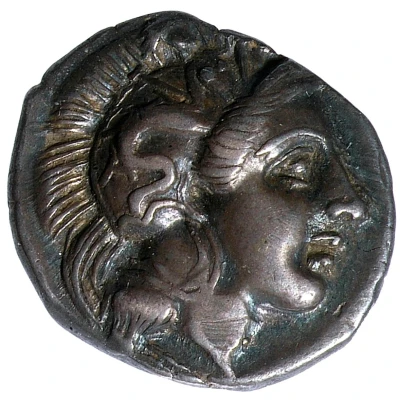
© Trustees of the British Museum
© Trustees of the British Museum
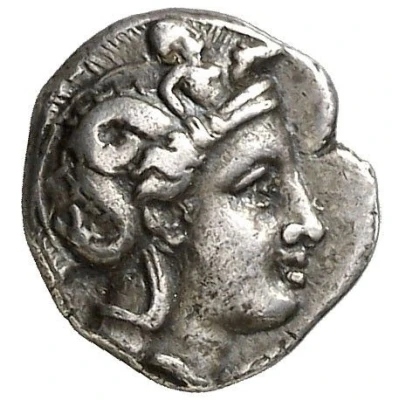
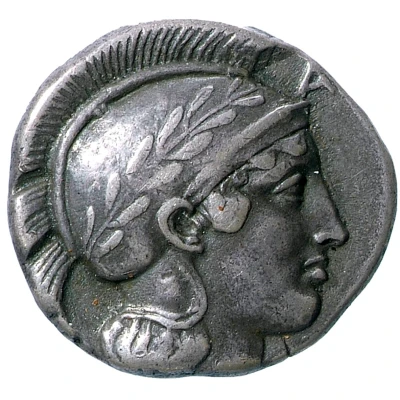
Triobol 350 BC - 281 BC
| Silver | 1.36 g | - |
| Issuer | Thourioi (Lucania) |
|---|---|
| Type | Standard circulation coin |
| Years | 350 BC - 281 BC |
| Value | Triobol (½) |
| Currency | As |
| Composition | Silver |
| Weight | 1.36 g |
| Shape | Round (irregular) |
| Technique | Hammered |
| Demonetized | Yes |
| Updated | 2024-10-10 |
| Numista | N#394271 |
|---|---|
| Rarity index | 97% |
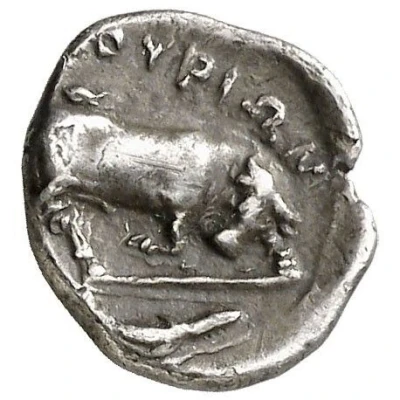
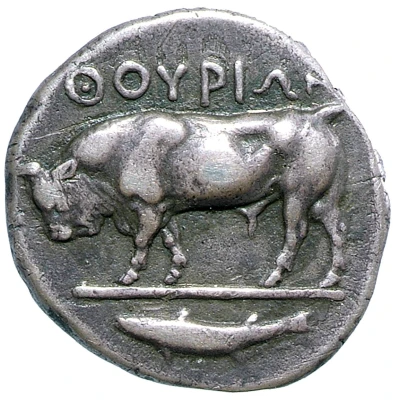
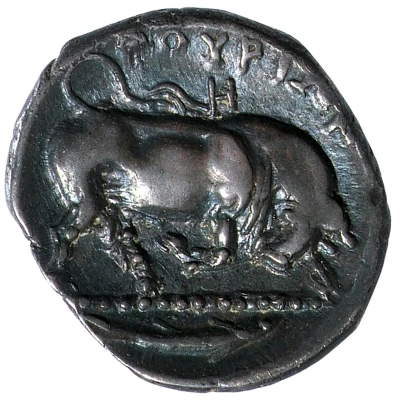
Reverse
Bull charging to right and in exergue, tunny fish.
Script: Greek
Lettering:
ΘΟΥΡΙΩΝ
H
Interesting fact
The Triobol coin from Thourioi (Lucania) was used as a form of currency in ancient Greece and has a unique design. One side of the coin features a mythological creature called a "satyr" - a half-human, half-goat figure - while the other side features a horse. This design was meant to symbolize the connection between the wild and the tamed, as well as the balance between nature and human civilization.