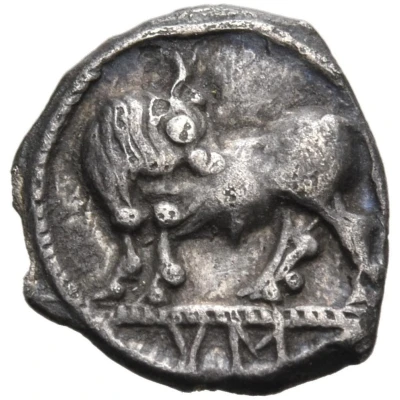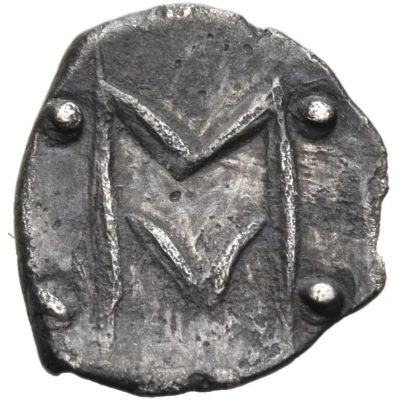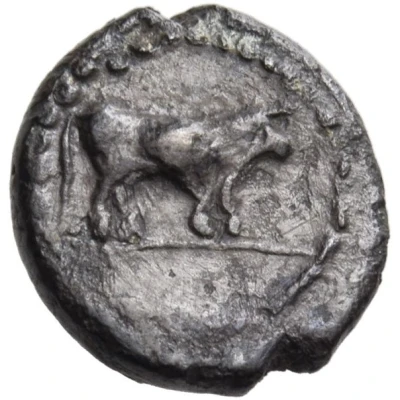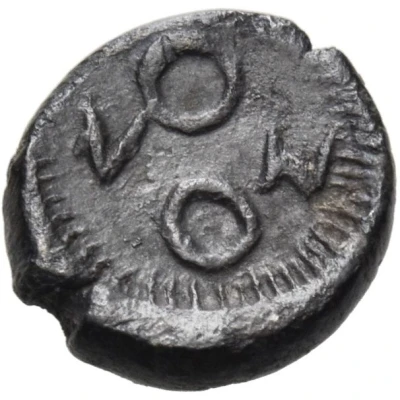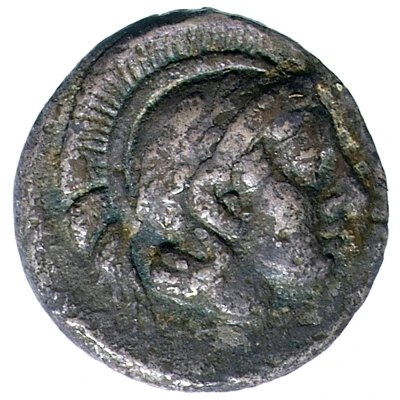
© Trustees of the British Museum
© Trustees of the British Museum
Trihemiobol 443 BC - 425 BC
| Silver | 0.4 g | - |
| Issuer | Sybaris (Lucania) |
|---|---|
| Type | Standard circulation coin |
| Years | 443 BC - 425 BC |
| Value | Trihemiobol (¼) |
| Currency | Achaean drachm |
| Composition | Silver |
| Weight | 0.4 g |
| Shape | Round (irregular) |
| Technique | Hammered |
| Demonetized | Yes |
| Updated | 2024-10-10 |
| Numista | N#393538 |
|---|---|
| Rarity index | 100% |
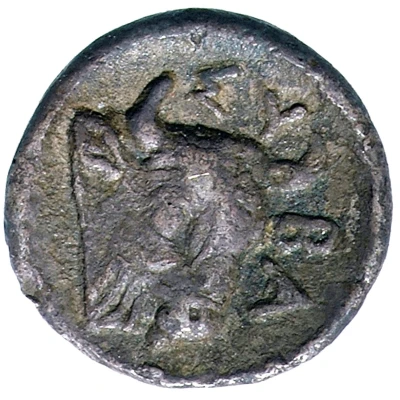
Reverse
Head of bull right.
Script: Greek
Lettering: ΣYBA
Interesting fact
The Trihemiobol coin was used as a form of currency in the ancient Greek city of Sybaris, which was located in present-day southern Italy. The coin's design features a mythological creature called a "Triton," which is a half-human, half-fish creature that was believed to inhabit the sea. The Triton is depicted on the coin holding a fish in one hand and a shell in the other, symbolizing the city's strong maritime culture and connection to the sea.