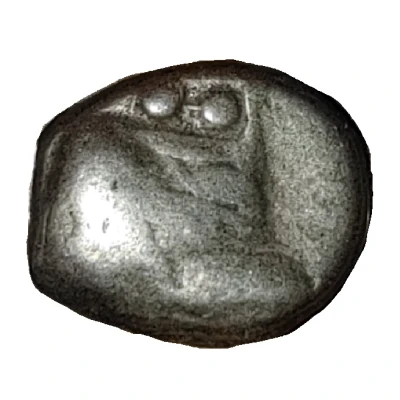
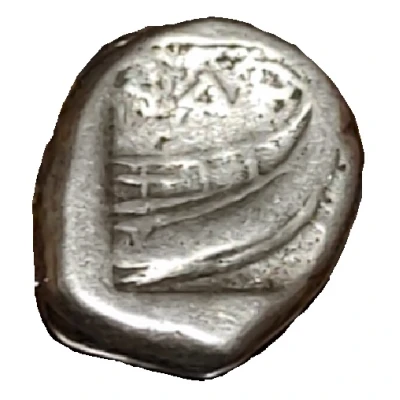
© PA-ENGINEER (CC0)
© PA-ENGINEER (CC0)
Tetrobol 500 BC - 440 BC
| Silver | 3.0 g | 13.5 mm |
| Issuer | Phaselis (Lycia) |
|---|---|
| Type | Standard circulation coin |
| Years | 500 BC - 440 BC |
| Value | Tetrobol (⅔) |
| Currency | Drachm |
| Composition | Silver |
| Weight | 3.0 g |
| Diameter | 13.5 mm |
| Thickness | 3.5 mm |
| Shape | Round (irregular) |
| Technique | Hammered |
| Orientation | Variable alignment ↺ |
| Demonetized | Yes |
| Updated | 2024-10-10 |
| Numista | N#275920 |
|---|---|
| Rarity index | 95% |
Reverse
Stern of galley, right
Script: Greek
Lettering: ΦAΣ
Translation:
Phi Alpha Sigma
PhASelis (City of issue)
Interesting fact
One interesting fact about the Tetrobol coin from Phaselis (Lycia) is that it features a unique blend of Greek and Lycian elements in its design. The obverse side of the coin depicts a lion's head, which is a common motif in ancient Greek coinage, while the reverse side shows a seated figure of a Lycian goddess, believed to be either Athena or Aphrodite, surrounded by a crescent moon and a star. This blending of cultural influences reflects the rich cultural heritage of Phaselis, which was an important center of trade and commerce in the ancient world.