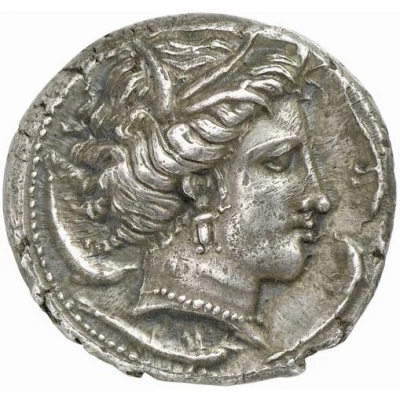
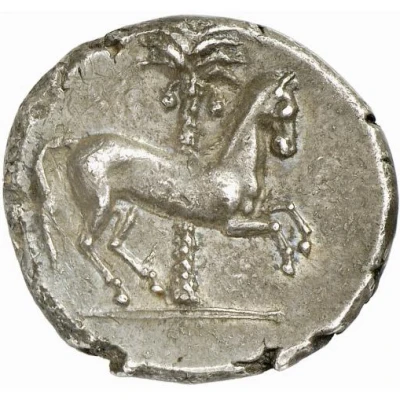
© Nomos AG
© Nomos AG
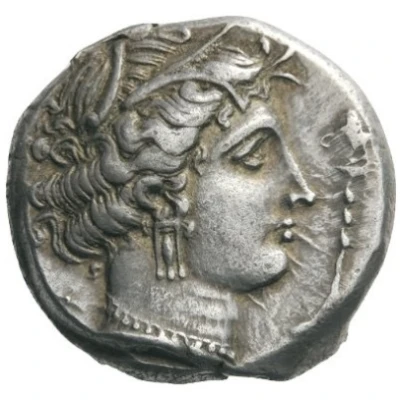
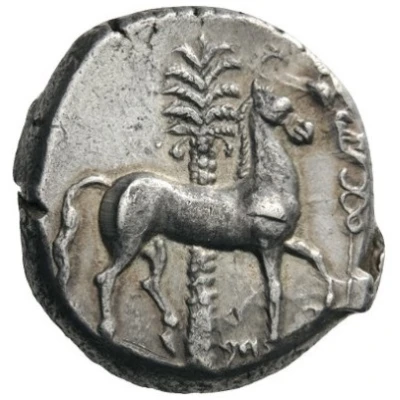
Tetradrachm 345 BC - 315 BC
| Silver | 16.68 g | - |
| Issuer | Uncertain Punic mint (Carthaginian Empire) |
|---|---|
| Type | Standard circulation coin |
| Years | 345 BC - 315 BC |
| Value | Tetradrachm (20) |
| Currency | Litra |
| Composition | Silver |
| Weight | 16.68 g |
| Shape | Round (irregular) |
| Technique | Hammered |
| Demonetized | Yes |
| Updated | 2024-10-09 |
| Numista | N#180840 |
|---|---|
| Rarity index | 100% |
Reverse
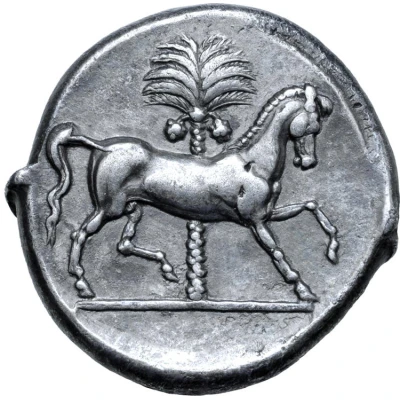
Horse prancing right before palm tree
Comment
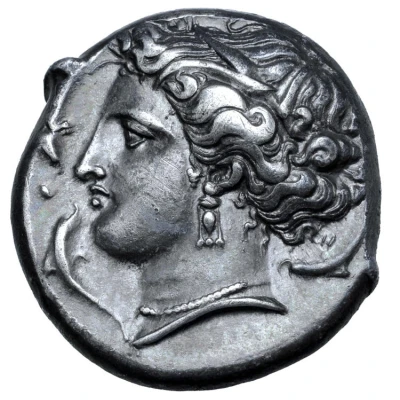
Jenkins, Punic 132 (O44/R119);A further examples of this type (17.13g, 26mm, 1h, About Extremely Fine):
© Image courtesy of Roma Numismatics Limited
◦ Auctioned by Roma Numismatics Ltd, Auction XVII, 28 March 2019, Lot 353. Estimated at 2,500 GBP, unsold;
◦ Auctioned by Roma Numismatics Ltd., Auction XI, 7 April 2016, lot 65;
◦ Auctioned by Roma Numismatics Ltd. inventory, privately purchased in London, November 2010.
Interesting fact
One interesting fact about the Tetradrachm coin from the Carthaginian Empire is that it features a unique blend of Greek and Carthaginian influences in its design. The obverse side of the coin depicts a portrait of the Carthaginian goddess Tanit, while the reverse side features a traditional Greek motif of a quadriga (a chariot pulled by four horses) surrounded by Greek inscriptions. This fusion of cultural elements reflects the complex history of Carthage, which was a Phoenician city-state that had strong trade and cultural ties with Greece.