© Fritz Rudolf Künker GmbH & Co. KG, Osnabrück and Lübke & Wiedemann KG, Leonberg
© Fritz Rudolf Künker GmbH & Co. KG, Osnabrück and Lübke & Wiedemann KG, Leonberg
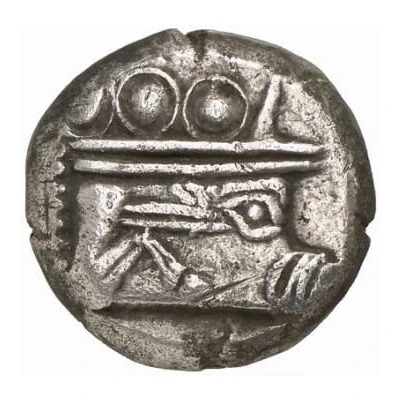
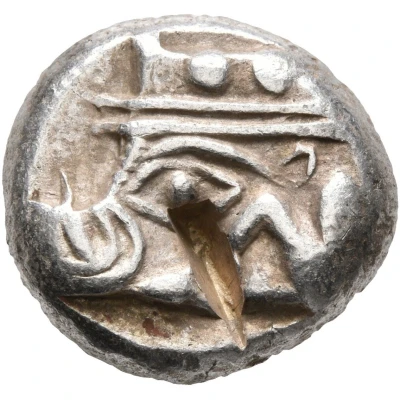
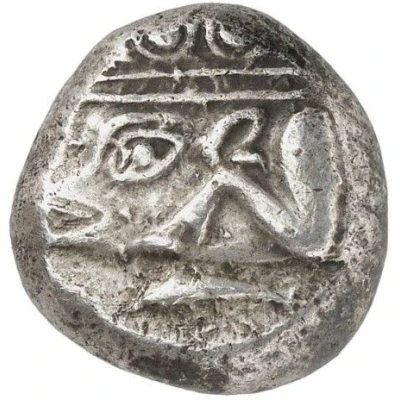
Stater 530 BC - 500 BC
| Silver | 11.21 g | - |
| Issuer | Phaselis (Lycia) |
|---|---|
| Type | Standard circulation coin |
| Years | 530 BC - 500 BC |
| Value | Silver Stater (3) |
| Currency | Drachm |
| Composition | Silver |
| Weight | 11.21 g |
| Shape | Round (irregular) |
| Technique | Hammered |
| Orientation | Variable alignment ↺ |
| Demonetized | Yes |
| Updated | 2024-10-10 |
| Numista | N#394039 |
|---|---|
| Rarity index | 100% |
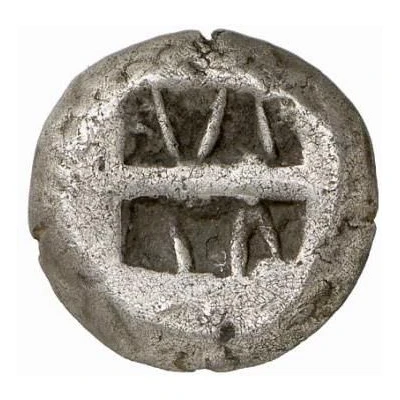
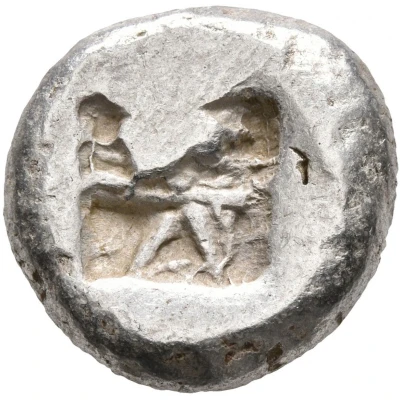
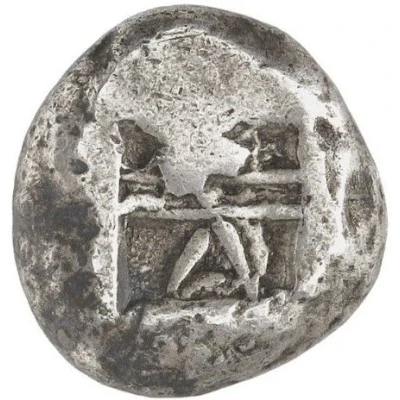
Reverse
Incuse square divided by two bands, with Λ-shaped feature in the lower section.
Interesting fact
The Phaselis Stater was used as a form of currency in the ancient city of Phaselis, which was located in present-day Turkey. The coin features an image of a lion's head on one side and an inscription on the other side that reads "ΦΑΣΗΛΙΤΩΝ" (Phaseliton), indicating its origin. The use of lion imagery on the coin may have been a symbol of the city's connection to the nearby Persian Empire, which was known for its use of lions as symbols of power and strength.