© Classical Numismatic Group, Inc.
© Classical Numismatic Group, Inc.
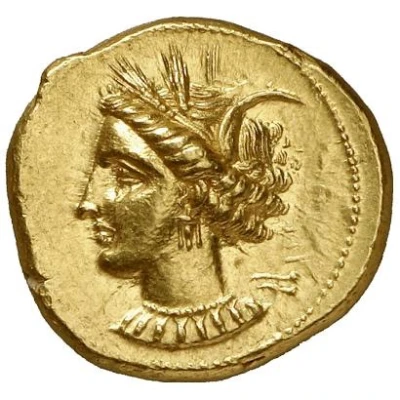
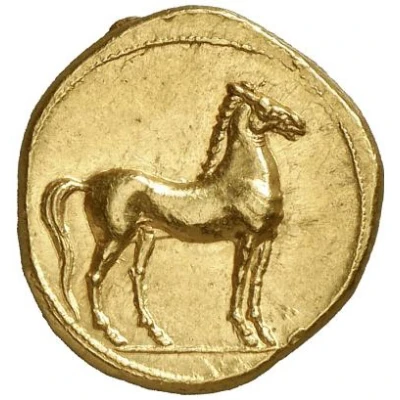
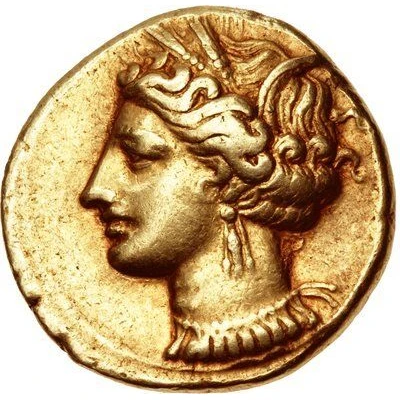
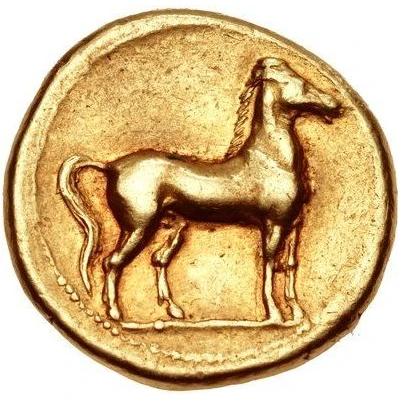
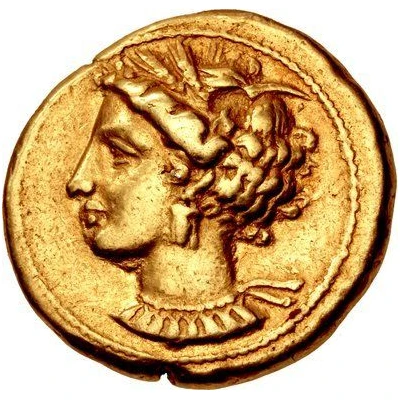
Stater 320 BC - 310 BC
| Electrum (72% gold) | 7.57 g | 19 mm |
| Issuer | Carthage (Zeugitana) |
|---|---|
| Type | Standard circulation coin |
| Years | 320 BC - 310 BC |
| Value | Gold Stater (12) |
| Currency | Shekel |
| Composition | Electrum (72% gold) |
| Weight | 7.57 g |
| Diameter | 19 mm |
| Shape | Round (irregular) |
| Technique | Hammered |
| Demonetized | Yes |
| Updated | 2024-10-09 |
| Numista | N#323396 |
|---|---|
| Rarity index | 100% |
Reverse
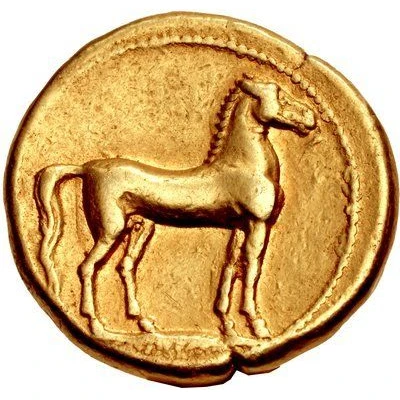
Horse standing right, left foreleg drawn slightly back; dotted pattern in exergue.
Interesting fact
The Carthaginian Stater coin was used as a form of currency in the ancient city of Carthage, which was located in what is now Tunisia. The coin features the image of a horse and a driver on one side, and a goddess on the other. The use of electrum, a naturally occurring alloy of gold and silver, in the coin's production was a significant innovation in minting technology at the time.