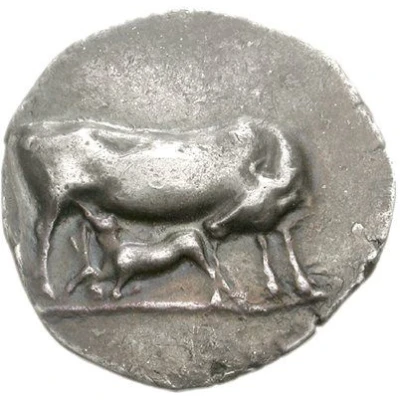
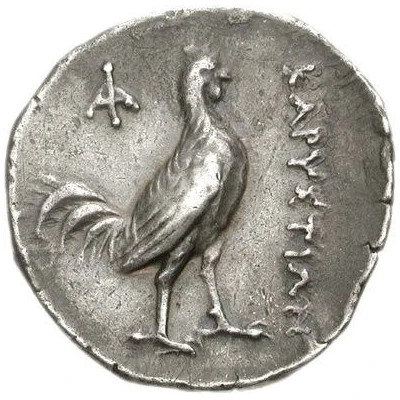
© Classical Numismatic Group, Inc.
© Classical Numismatic Group, Inc.
Stater 300 BC - 250 BC
| Silver | 7.48 g | - |
| Issuer | Carystus (Euboia) |
|---|---|
| Type | Standard circulation coin |
| Years | 300 BC - 250 BC |
| Value | 1 Stater = 3 Drachm |
| Currency | Drachm |
| Composition | Silver |
| Weight | 7.48 g |
| Shape | Round (irregular) |
| Technique | Hammered |
| Orientation | Variable alignment ↺ |
| Demonetized | Yes |
| Updated | 2024-10-10 |
| Numista | N#434348 |
|---|---|
| Rarity index | 100% |
Reverse
Cock standing right; monogram to left.
Script: Greek
Lettering: KAPYΣTIΩN
Comment
Robinson, Carystus 35.
Interesting fact
The Carystus Stater was used as a form of currency in ancient Greece and was considered a standard unit of exchange. It was made of silver and weighed around 7.48 grams, which was a significant amount for a coin at that time. The fact that it was made of silver and had a standardized weight shows that the ancient Greeks had a sophisticated understanding of metallurgy and currency. Additionally, the coin's design featured an image of a mythical creature, which added to its cultural significance. Overall, the Carystus Stater is an interesting example of ancient Greek currency and its importance in the history of numismatics.