© Numismatica Ars Classica NAC AG
© Numismatica Ars Classica NAC AG
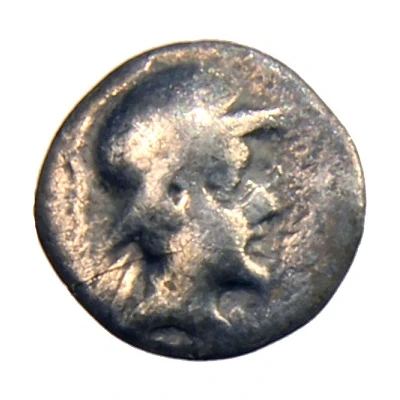
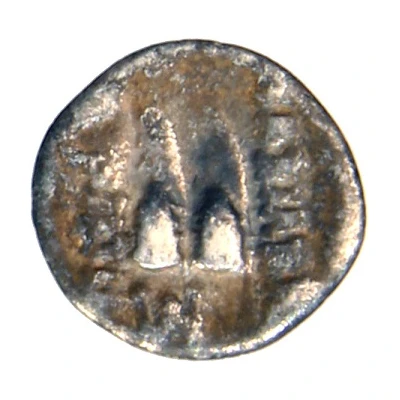
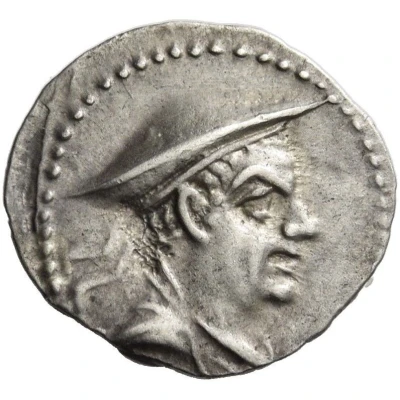
Obol - Antimachos I Bactra 174 BC - 165 BC
| Silver | 0.71 g | - |
| Issuer | Kings of Baktria |
|---|---|
| King | Antimachos I (Ἀντίμαχος Α΄ ὁ Θεός) (171 BC - 160 BC) |
| Type | Standard circulation coin |
| Years | 174 BC - 165 BC |
| Value | Obol (⅙) |
| Currency | Drachm (305-15BC) |
| Composition | Silver |
| Weight | 0.71 g |
| Shape | Round (irregular) |
| Technique | Hammered |
| Demonetized | Yes |
| Updated | 2024-10-09 |
| Numista | N#398444 |
|---|---|
| Rarity index | 95% |
Reverse
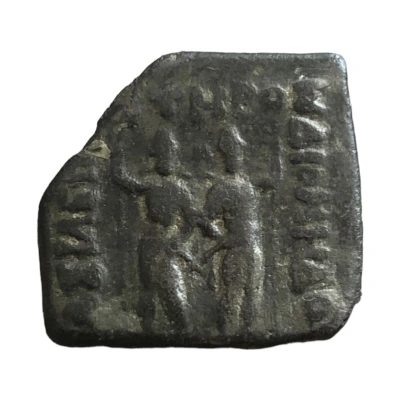
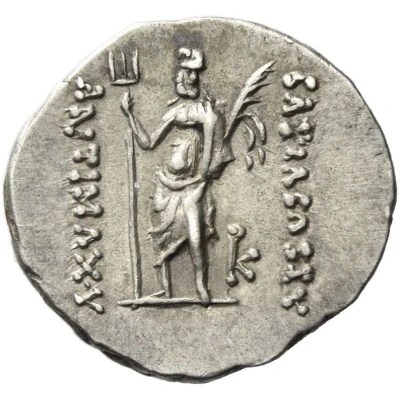
Poseidon, nude to the waist, standing facing, holding long trident in his right hand and filleted palm branch in his left; below, monogram.
Script: Greek
Lettering: ΒΑΣΙΛΕΩΣ ΘΕΟΥ ΑΝΤΙΜΑΧΟΥ
Translation: The god-king Antimachus
Interesting fact
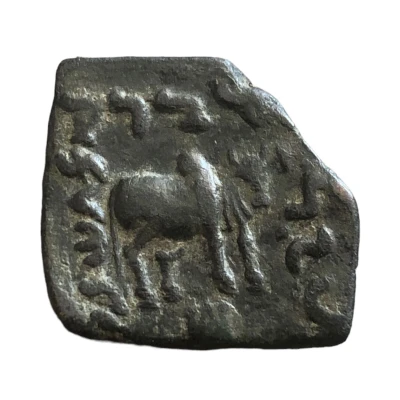
The Obol coin of Antimachos I (Bactra) was used as a form of currency in the ancient Greek city-state of Bactria, which was located in present-day Afghanistan. The coin features an image of a mythical creature called a "bactrian" on one side and the Greek goddess Athena on the other. This coin was minted during the reign of Antimachos I, who was a powerful king of Bactria and played a significant role in the expansion of the city-state's territories. Despite being made of silver, the Obol coin was not worth much in terms of monetary value, but it holds great historical significance as a symbol of the rich cultural heritage of ancient Bactria.