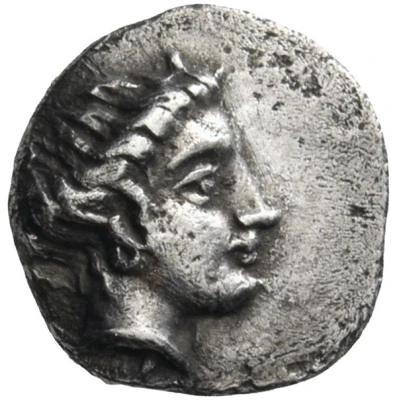
© Nomos AG
© Nomos AG
Obol 338 BC - 308 BC
| Silver | 0.62 g | 8.5 mm |
| Issuer | Chalkis (Euboia) |
|---|---|
| Type | Standard circulation coin |
| Years | 338 BC - 308 BC |
| Value | Obol (⅙) |
| Currency | Drachm |
| Composition | Silver |
| Weight | 0.62 g |
| Diameter | 8.5 mm |
| Shape | Round (irregular) |
| Technique | Hammered |
| Demonetized | Yes |
| Updated | 2024-10-10 |
| Numista | N#236630 |
|---|---|
| Rarity index | 100% |
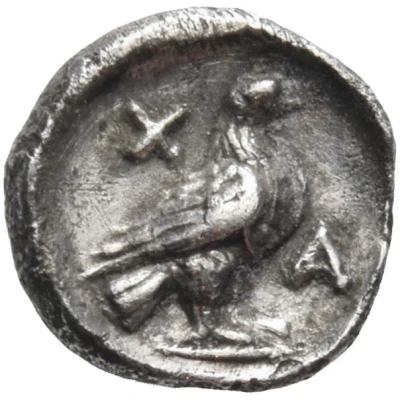
Reverse
Eagle standing to right
Script: Greek
Lettering: X A
Interesting fact
The Obol coin was used as a form of payment for the ancient Greeks, specifically in the city-state of Chalkis (Euboia) during the 4th century BC. It was made of silver and weighed around 0.62 grams, which was a significant amount for a coin at that time. Despite its small size, the Obol coin played a crucial role in the economy of the city-state and was used for everyday transactions, such as buying goods and services.