© Bertolami Fine Arts
© Bertolami Fine Arts
Hexas 400 BC - 390 BC
| Bronze | 5.81 g | 18 mm |
| Issuer | Segesta (Sicily) |
|---|---|
| Type | Standard circulation coin |
| Years | 400 BC - 390 BC |
| Value | Hexas (⅙) |
| Currency | Litra |
| Composition | Bronze |
| Weight | 5.81 g |
| Diameter | 18 mm |
| Shape | Round (irregular) |
| Technique | Hammered |
| Demonetized | Yes |
| Updated | 2024-10-10 |
| Numista | N#425847 |
|---|---|
| Rarity index | 100% |
Reverse
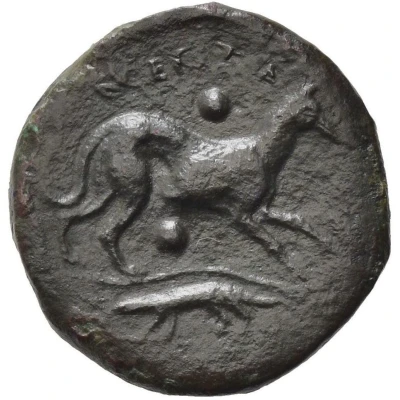
Hound standing right; two pellets, weasel in exergue.
Interesting fact
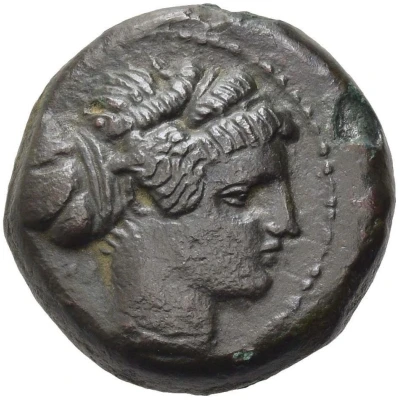
The Hexas coin features a unique design on its obverse side, depicting a hexagon-shaped pattern of six concentric circles, which gives the coin its name. This distinctive design has led some numismatists to suggest that the Hexas may have been used as a form of currency in ancient Sicily, possibly for use in trade with other cities or regions. Despite its unusual design, the Hexas coin remains a relatively rare and valuable collector's item, with some examples selling for thousands of dollars at auction.