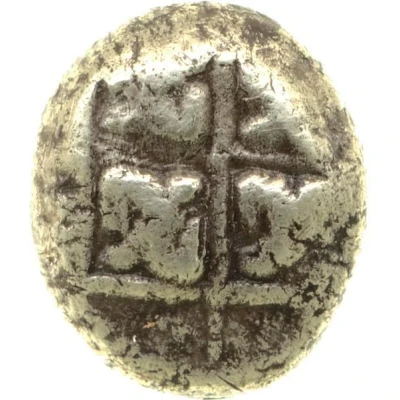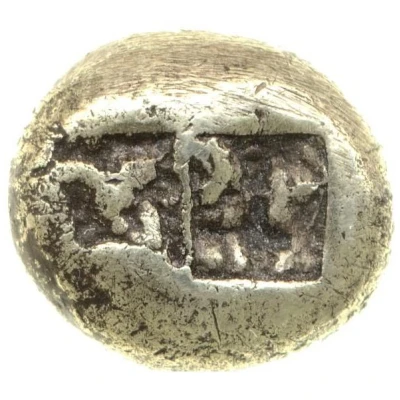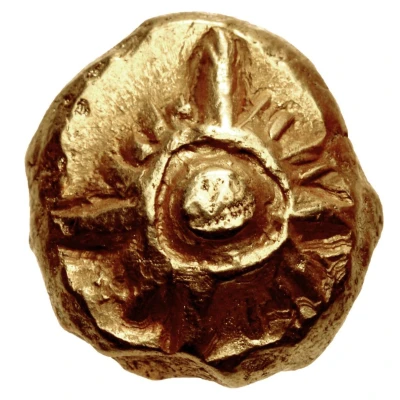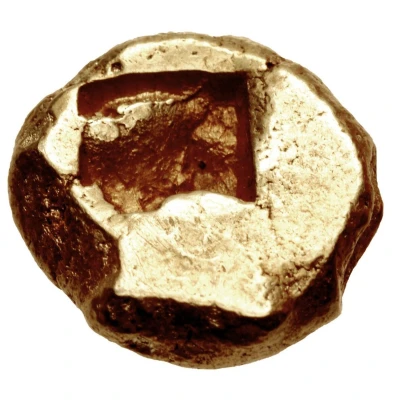
© Classical Numismatic Group, Inc.
© Classical Numismatic Group, Inc.
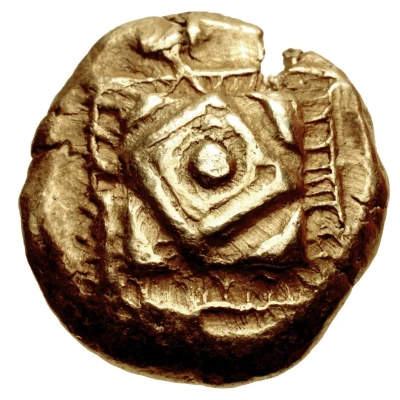
Hemistater 625 BC - 600 BC
| Electrum | 7.11 g | 15.5 mm |
| Issuer | Uncertain Ionian city |
|---|---|
| Type | Standard circulation coin |
| Years | 625 BC - 600 BC |
| Value | Hemistater (½) |
| Currency | Electrum Stater |
| Composition | Electrum |
| Weight | 7.11 g |
| Diameter | 15.5 mm |
| Shape | Round (irregular) |
| Technique | Hammered, Incuse |
| Demonetized | Yes |
| Updated | 2024-10-10 |
| Numista | N#189923 |
|---|---|
| Rarity index | 100% |
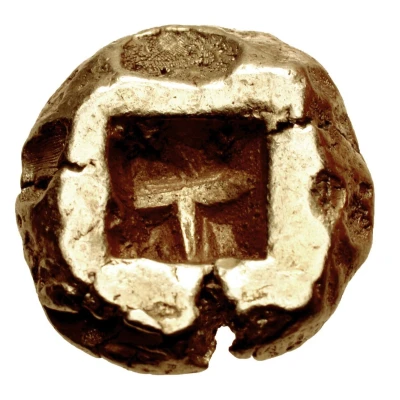
Reverse
Incuse square
Comment
Lydo-Milesian standard.
Traité I 6, pl. I, 5.
Interesting fact
The Hemistater coin was used as a form of currency in ancient Ionia, which is now modern-day Turkey. The coin's name "Hemistater" comes from the Greek word "hēmi-" meaning "half" and "stater" meaning "standard," indicating that it was worth half the value of a standard coin. Despite its relatively low value, the Hemistater was still made of electrum, a rare and valuable metal that was highly prized in ancient times. This suggests that even low-denomination coins were made with a high level of craftsmanship and attention to detail, reflecting the importance of currency in ancient societies.