© Gudea (CC BY-SA)
© Gudea (CC BY-SA)
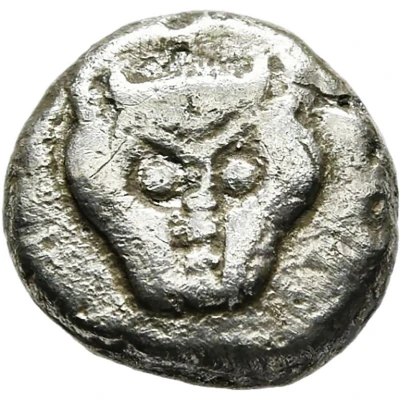
Hemiobol 480 BC - 450 BC
| Silver | 0.45 g | 7 mm |
| Issuer | Pantikapaion (Taurica) |
|---|---|
| Type | Standard circulation coin |
| Years | 480 BC - 450 BC |
| Value | Hemiobol (1⁄12) |
| Currency | Drachm |
| Composition | Silver |
| Weight | 0.45 g |
| Diameter | 7 mm |
| Shape | Round (irregular) |
| Technique | Hammered, Incuse |
| Orientation | Variable alignment ↺ |
| Demonetized | Yes |
| Updated | 2024-10-10 |
| Numista | N#393874 |
|---|---|
| Rarity index | 92% |
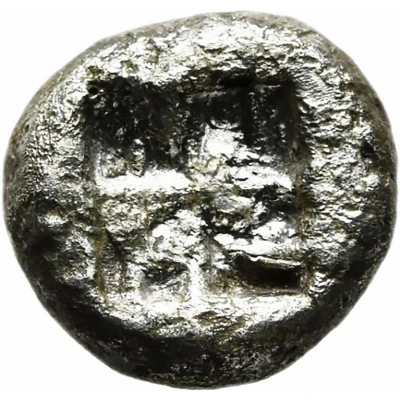
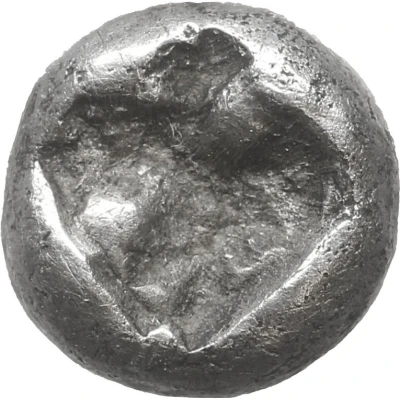
Reverse
Incuse square.
Interesting fact
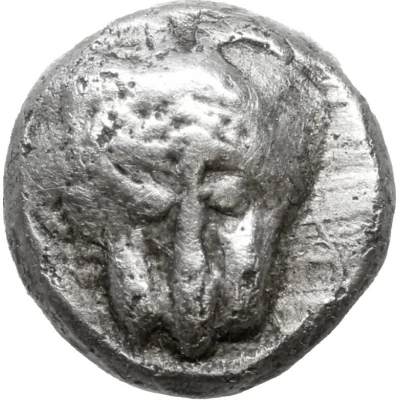
The Hemiobol coin from Pantikapaion (Taurica) was used as a form of currency in the ancient Greek city of Pantikapaion, which is now modern-day Kerch, Ukraine. The coin features an image of a horned animal, possibly a bull or a goat, on one side and a wheel or a rose on the other. Despite its small size, the Hemiobol was an important coin in ancient Greece, as it was used for everyday transactions and was a symbol of the city's wealth and power.