© Heritage Auctions
© Heritage Auctions
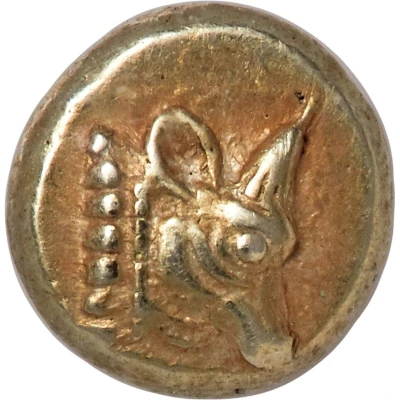
Hemihekte 600 BC - 550 BC
| Electrum | 1.2 g | 8 mm |
| Issuer | Uncertain Ionian city |
|---|---|
| Type | Standard circulation coin |
| Years | 600 BC - 550 BC |
| Value | Hemihekte (1⁄12) |
| Currency | Electrum Stater |
| Composition | Electrum |
| Weight | 1.2 g |
| Diameter | 8 mm |
| Shape | Round (irregular) |
| Technique | Hammered, Incuse |
| Orientation | Variable alignment ↺ |
| Demonetized | Yes |
| Updated | 2024-10-09 |
| Numista | N#370263 |
|---|---|
| Rarity index | 100% |
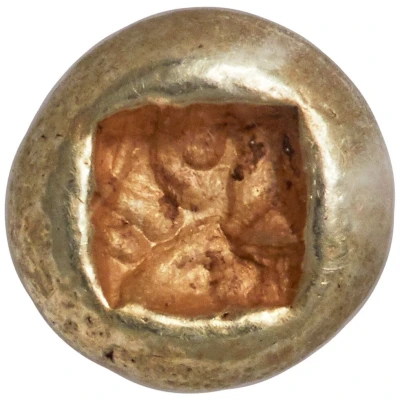
Reverse
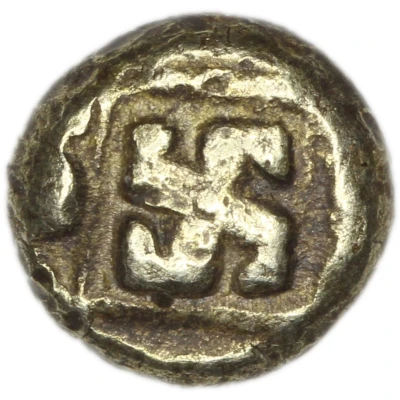
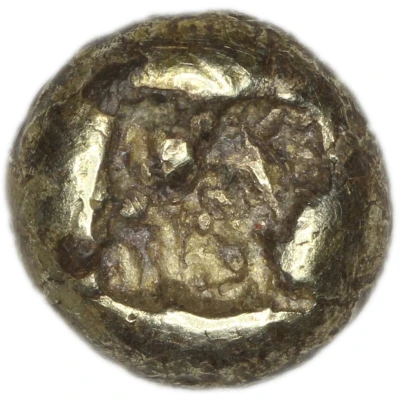
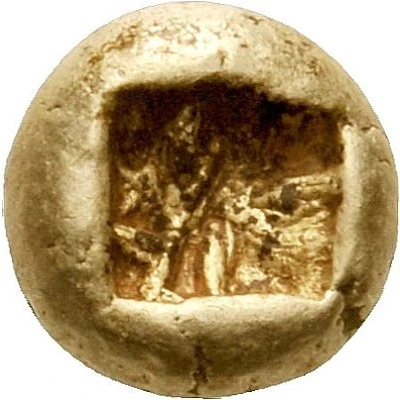
Incuse square punch with striated geometric interior surfaces.
Comment
Milesian standard.Interesting fact
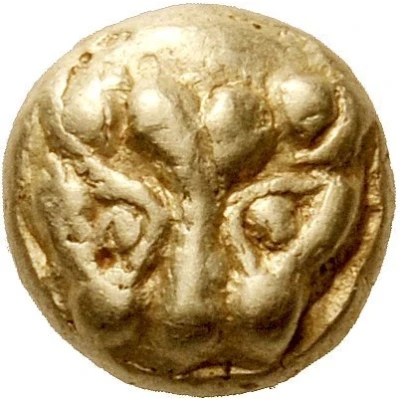
The Hemihekte coin was used as a form of currency in ancient Ionia, which is now modern-day Turkey, and it's one of the earliest known coins to feature an image of a human. The obverse side of the coin depicts a bearded man, believed to be a king or a deity, while the reverse side features a quadripartite incuse, which is a pattern of four squares within a square. This design was a common motif in ancient Ionian art and architecture.