© Classical Numismatic Group, Inc.
© Classical Numismatic Group, Inc.
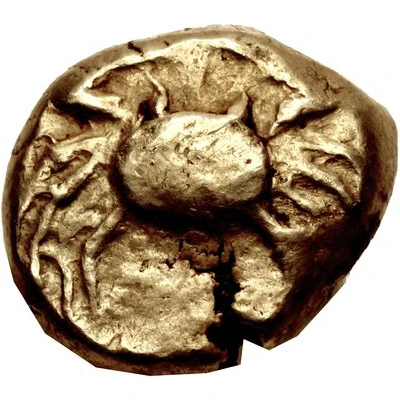
Hekte 625 BC - 600 BC
| Electrum | 2.54 g | 10.0 mm |
| Issuer | Kos (Carian Islands) |
|---|---|
| Type | Standard circulation coin |
| Years | 625 BC - 600 BC |
| Value | Electrum Hekte (14⁄3) |
| Currency | Drachm |
| Composition | Electrum |
| Weight | 2.54 g |
| Diameter | 10.0 mm |
| Shape | Round (irregular) |
| Technique | Hammered, Incuse |
| Demonetized | Yes |
| Updated | 2024-10-09 |
| Numista | N#152574 |
|---|---|
| Rarity index | 100% |
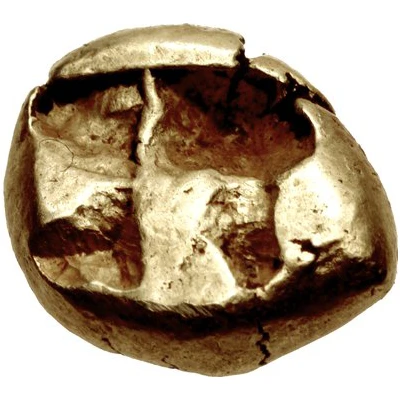
Reverse
Quadripartite incuse square
Interesting fact
The Hekte coin was used as a form of currency in ancient Greece, specifically in the Carian Islands, and its design features a unique blend of ancient Greek and Near Eastern influences. The obverse side of the coin depicts a lion's head, while the reverse side features a Greek legend and an image of a mythical creature known as a "sphinx." This blend of cultural influences reflects the diverse cultural heritage of the Carian Islands, which were located at the crossroads of the ancient Greek and Near Eastern worlds.