© Classical Numismatic Group, Inc.
© Classical Numismatic Group, Inc.
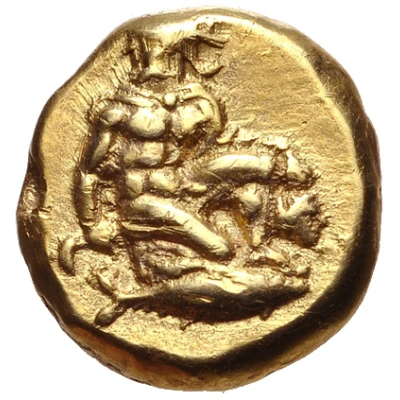
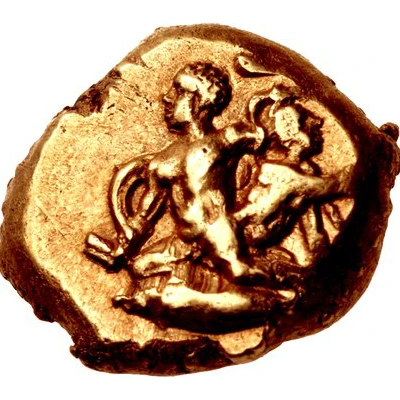
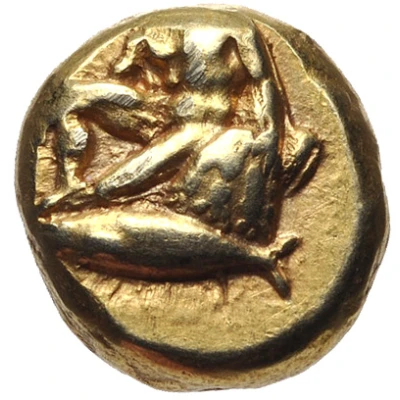
Hekte 450 BC - 330 BC
| Electrum | 2.71 g | 10.0 mm |
| Issuer | Kyzikos (Mysia) |
|---|---|
| Period | City administration (600 BC - 1 AD) |
| Type | Standard circulation coin |
| Years | 450 BC - 330 BC |
| Value | Hekte (⅙) |
| Currency | Electrum Stater (600-330BC) |
| Composition | Electrum |
| Weight | 2.71 g |
| Diameter | 10.0 mm |
| Shape | Round (irregular) |
| Technique | Hammered, Incuse |
| Demonetized | Yes |
| Updated | 2024-10-10 |
| Numista | N#134355 |
|---|---|
| Rarity index | 100% |
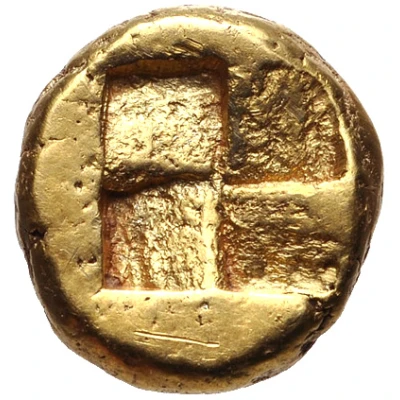
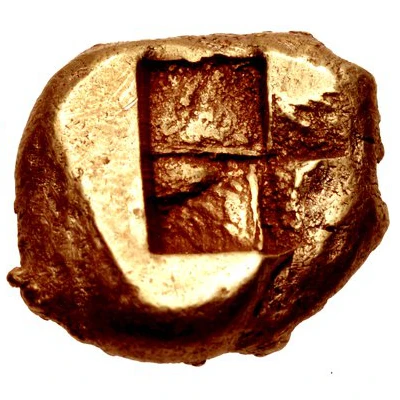
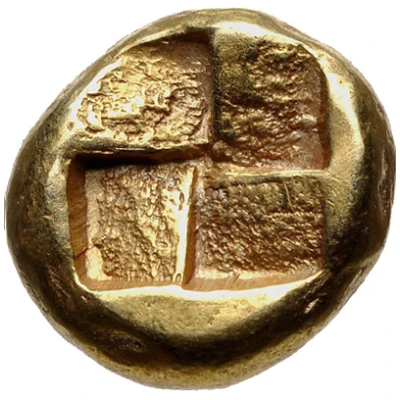
Reverse
Quadripartite incuse square.
Comment
Warren 1489.
Interesting fact
One interesting fact about the Hekte coin from Kyzikos (Mysia) is that it features a unique blend of Greek and Persian design elements. The obverse side of the coin depicts a lion's head, which is a common motif in ancient Greek coinage, while the reverse side features a Persian-style altar with a fire burning on top, which is a symbol of the ancient Persian religion, Zoroastrianism. This blending of cultural influences reflects the complex history of the region and the cultural exchange that took place during the time period.