© Roma Numismatics Limited
© Roma Numismatics Limited
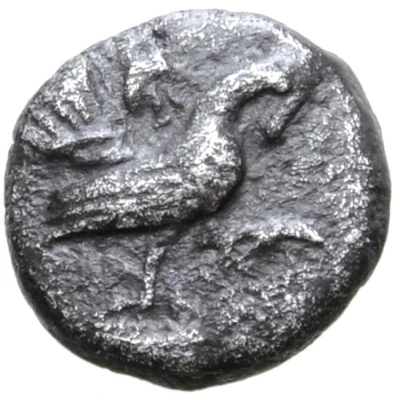
Diobol 492 BC - 470 BC
| Silver | 1.15 g | 10 mm |
| Issuer | Selymbria (Thrace) |
|---|---|
| Type | Standard circulation coin |
| Years | 492 BC - 470 BC |
| Value | Diobol (⅓) |
| Currency | Drachm |
| Composition | Silver |
| Weight | 1.15 g |
| Diameter | 10 mm |
| Shape | Round (irregular) |
| Technique | Hammered, Incuse |
| Orientation | Variable alignment ↺ |
| Demonetized | Yes |
| Updated | 2024-10-10 |
| Numista | N#194546 |
|---|---|
| Rarity index | 100% |
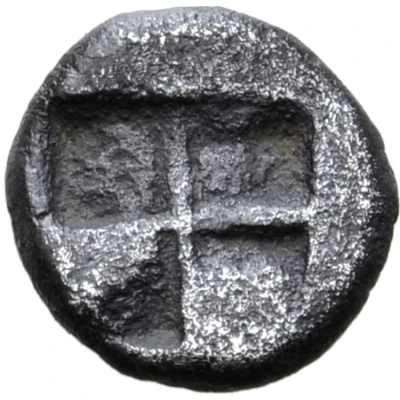
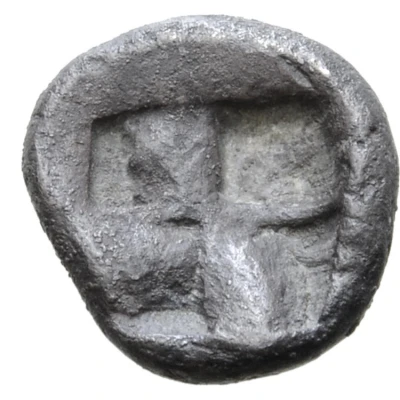
Reverse
Quadripartite incuse square.
Interesting fact
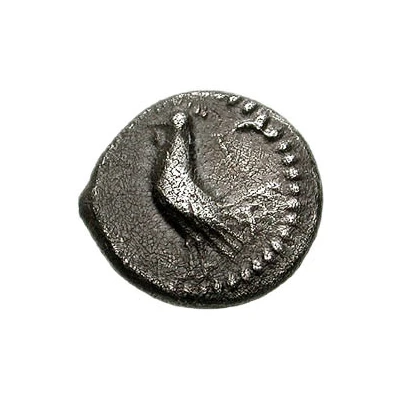
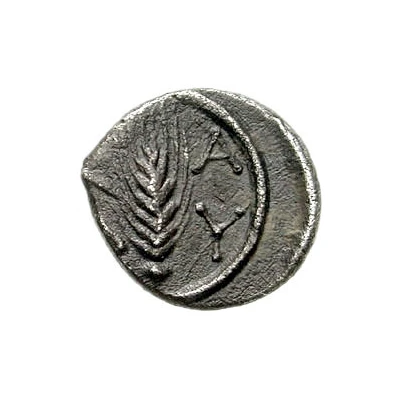
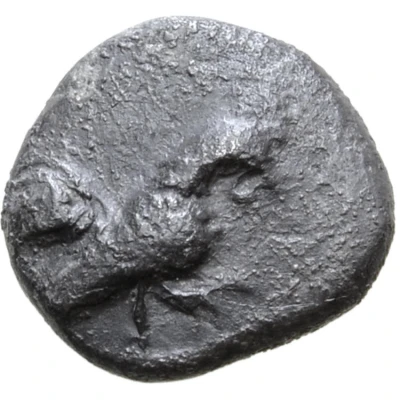
The Diobol coin was used as a form of currency in the ancient Greek city of Selymbria, located in Thrace, which is now modern-day Bulgaria. The coin features an image of a grapevine on one side and a stag on the other, symbolizing the region's rich agriculture and wildlife. Despite its small size, the Diobol coin played a significant role in the economy of the city and was widely used for trade and commerce.