© Classical Numismatic Group, Inc.
© Classical Numismatic Group, Inc.
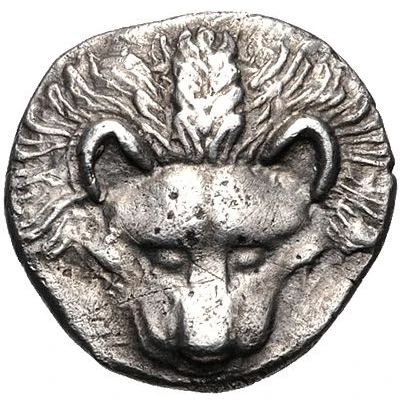
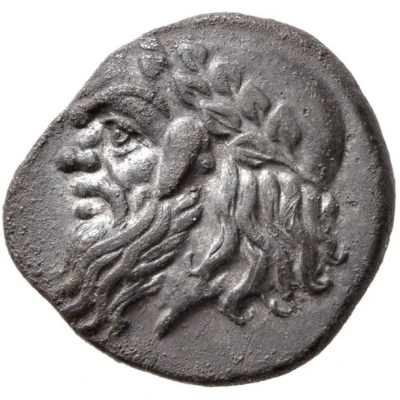
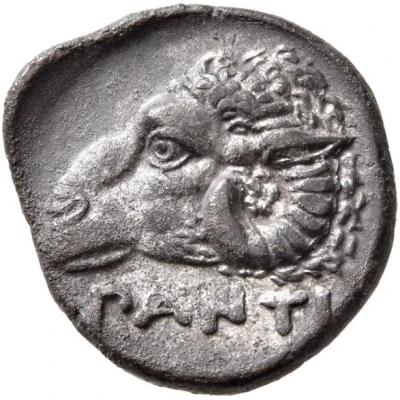
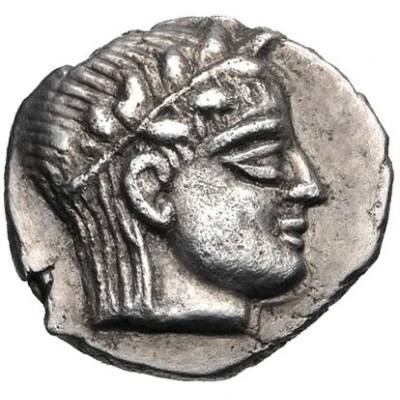
Diobol 420 BC - 410 BC
| Silver | 1.33 g | 12 mm |
| Issuer | Pantikapaion (Taurica) |
|---|---|
| Type | Standard circulation coin |
| Years | 420 BC - 410 BC |
| Value | Diobol (⅓) |
| Currency | Drachm |
| Composition | Silver |
| Weight | 1.33 g |
| Diameter | 12 mm |
| Shape | Round (irregular) |
| Technique | Hammered, Incuse |
| Demonetized | Yes |
| Updated | 2024-10-10 |
| Numista | N#411838 |
|---|---|
| Rarity index | 100% |
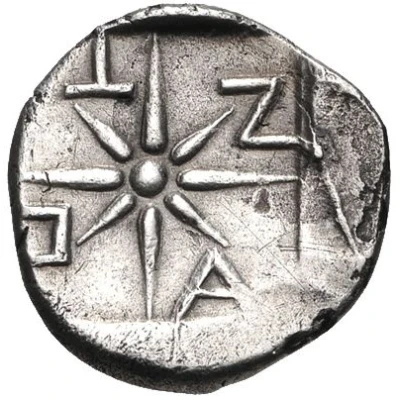
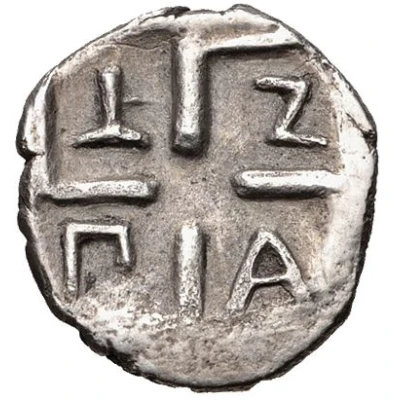
Reverse
Ethnic within quarters of partially-quadripartite incuse square.
Script: Greek
Lettering: ΠANT
Comment
According to Anokhin coin is struck in Apollo Prostates temple in Pantikapaion.
Interesting fact
The Diobol coin from Pantikapaion (Taurica) was used as a form of currency in the ancient Greek city of Pantikapaion, which is now modern-day Kerch, Ukraine. The coin features an image of a dolphin on one side and a grapevine on the other, symbolizing the city's strong maritime and agricultural traditions. Despite its small size, the Diobol coin played a significant role in the economy of the city and surrounding regions, demonstrating the importance of trade and commerce in ancient Greek society.
Price
| Date | Mintage | VG | F | VF | XF | AU | UNC |
|---|---|---|---|---|---|---|---|
| ND (420 BC - 410 BC) | - | - | - | - | - | - |
Values in the table are based on evaluations by sales realized on Internet platforms. They serve as an indication only for Diobol (420 BC - 410 BC) coin.