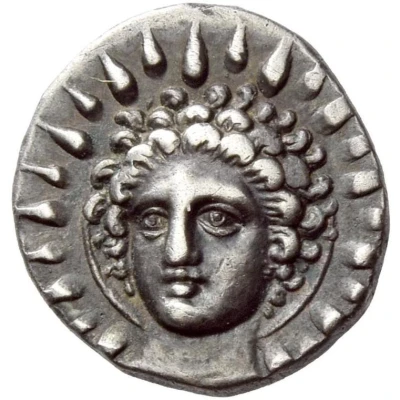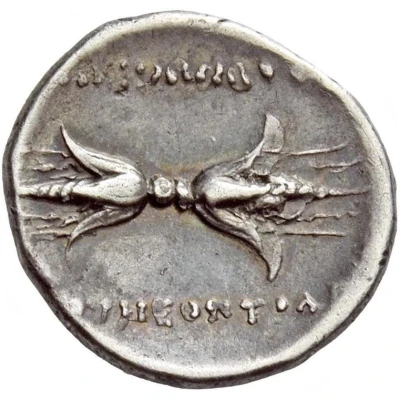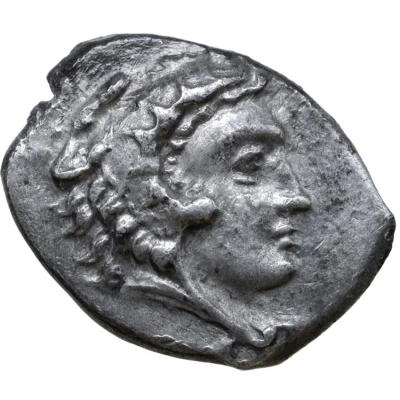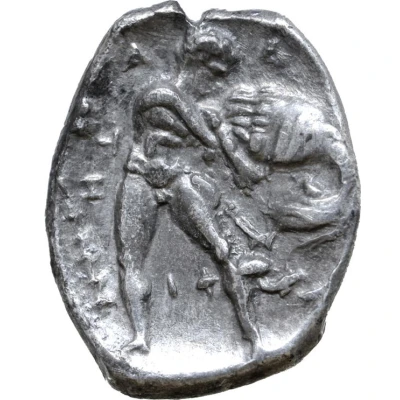
© Heritage Auctions
© Heritage Auctions
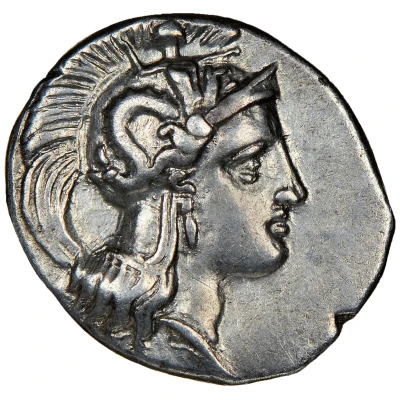
Diobol 325 BC - 280 BC
| Silver | 1.09 g | 13 mm |
| Issuer | Tarentum (Calabria) |
|---|---|
| Type | Standard circulation coin |
| Years | 325 BC - 280 BC |
| Value | Diobol (⅓) |
| Currency | Campanian (Italic-Achaean) drachm |
| Composition | Silver |
| Weight | 1.09 g |
| Diameter | 13 mm |
| Shape | Round (irregular) |
| Technique | Hammered |
| Demonetized | Yes |
| Updated | 2024-10-09 |
| Numista | N#280412 |
|---|---|
| Rarity index | 90% |
Reverse
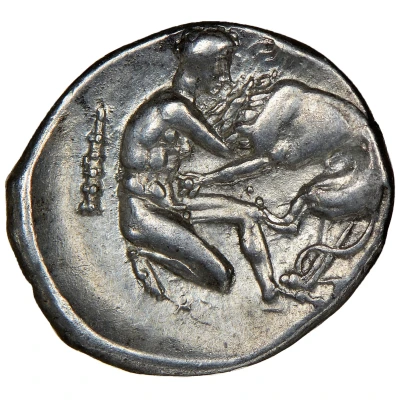
Hercules kneeling right, one arm wrapped around neck of the Nemean lion, which crouches left, clawing at his leg; club to left.
Comment
The following table illustrates some of the varieties of this large series :

Interesting fact
The Diobol coin was used as a form of currency in the ancient Greek city of Tarentum, which is now located in Calabria, Italy. The coin features an image of a mythical creature called a "Taras," which is a young boy riding a dolphin. This image was a symbol of the city and represented its connection to the sea. The coin was made of silver and weighed 1.09 grams, making it a valuable and durable form of currency for the time period.
Price
| Date | Mintage | VG | F | VF | XF | AU | UNC |
|---|---|---|---|---|---|---|---|
| ND (325 BC - 280 BC) | - | - | - | - | - | - |
Values in the table are based on evaluations by sales realized on Internet platforms. They serve as an indication only for Diobol (325 BC - 280 BC) coin.