© Tauler & Fau Subastas
© Tauler & Fau Subastas
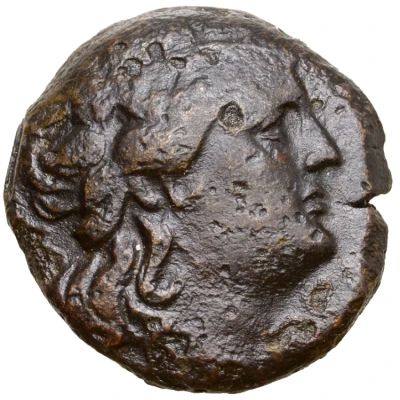
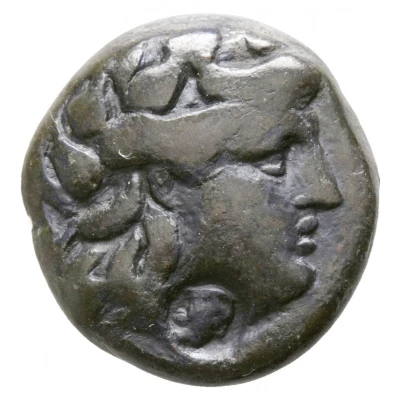
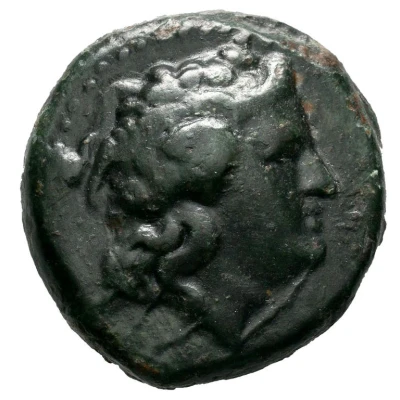
Dichalkon 300 BC - 101 BC
| Bronze | 8.1 g | 23 mm |
| Issuer | Kallatis (Thrace) |
|---|---|
| Type | Standard circulation coin |
| Years | 300 BC - 101 BC |
| Value | Dichalkon (1⁄24) |
| Currency | Drachm |
| Composition | Bronze |
| Weight | 8.1 g |
| Diameter | 23 mm |
| Shape | Round (irregular) |
| Technique | Hammered |
| Orientation | Variable alignment ↺ |
| Demonetized | Yes |
| Updated | 2024-10-10 |
| Numista | N#194431 |
|---|---|
| Rarity index | 100% |
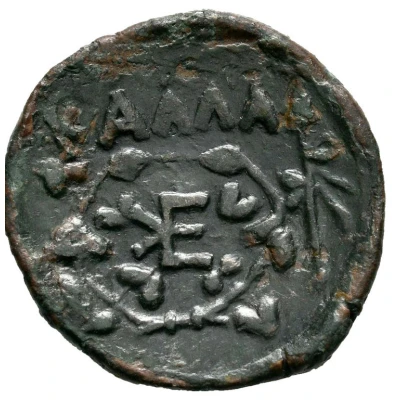
Reverse
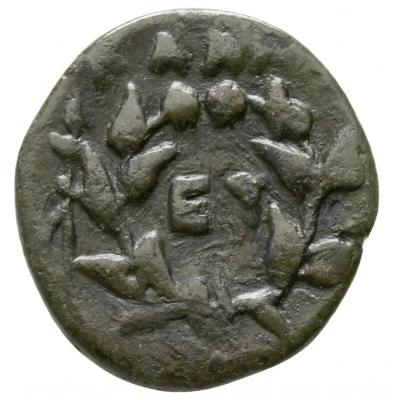
Monogram inside ivy wreath.
Script: Greek
Lettering:
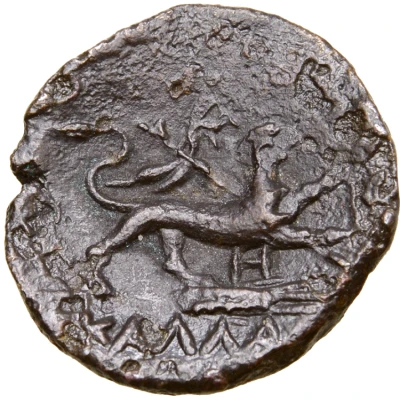
ΚΑΛΛΑ.
E
Translation: Kallatis
Interesting fact
The Dichalkon coin was used as a form of currency in the ancient Greek city of Kallatis, located in Thrace, during the 3rd century BC. Despite being made of bronze, a relatively inexpensive material, the coin was still carefully crafted with detailed designs, showcasing the importance of aesthetics in ancient Greek currency. One side of the coin features an image of a grapevine, while the other side bears the image of a mythical creature, possibly a Griffin or a Pegasus. This coin is a testament to the advanced craftsmanship and artistic skills of ancient Greek civilization.