© Bibliothèque nationale de France
© Bibliothèque nationale de France
Dichalkon 200 BC - 100 BC
| Bronze | 3.5 g | 16 mm |
| Issuer | Thyateira (Lydia) |
|---|---|
| Type | Standard circulation coin |
| Years | 200 BC - 100 BC |
| Value | Dichalkon (1⁄24) |
| Currency | Drachm |
| Composition | Bronze |
| Weight | 3.5 g |
| Diameter | 16 mm |
| Shape | Round (irregular) |
| Technique | Hammered |
| Orientation | Variable alignment ↺ |
| Demonetized | Yes |
| Updated | 2024-10-10 |
| Numista | N#70452 |
|---|---|
| Rarity index | 85% |
Reverse
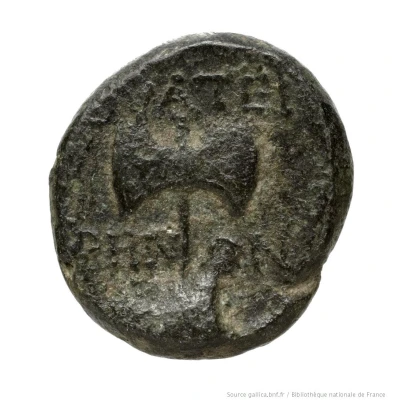
Double-headed axe
Script: Greek
Lettering: ΘΥΑΤΕΙΡΗΝΩΝ
Translation: Thyateira
Edge
Rough
Interesting fact
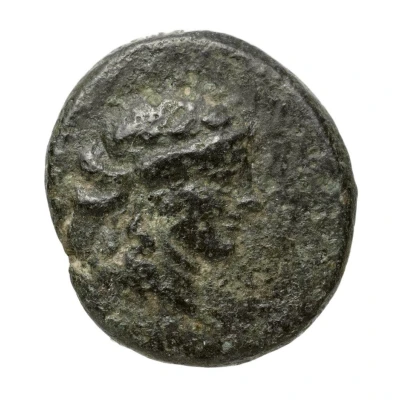
One interesting fact about the Dichalkon coin from Thyateira (Lydia) is that it features a unique blend of Greek and Persian influences in its design. The obverse side of the coin depicts a bearded king, likely King Croesus, in a Persian-style crown, while the reverse side shows a Greek-style mythological scene of a griffin and a stag. This fusion of design elements reflects the cultural exchange and blending that occurred during the Hellenistic period, when Greek cities like Thyateira were under Persian rule.