© Sincona AG
© Sincona AG
Denier - Thietmar ND
| Silver | 1 g | - |
| Issuer | Saxon Eastern March (German States) |
|---|---|
| Issuer | Saxon Eastern March (German States) |
| Margrave | Thietmar (1015-1030) |
| Margrave | Thietmar (1015-1030) |
| Type | Standard circulation coin |
| Type | Standard circulation coin |
| Years | 1004-1048 |
| Years | 1004-1048 |
| Value | 1 Denier |
| Value | 1 Denier |
| Composition | Silver |
| Composition | Silver |
| Weight | 1 g |
| Weight | 1 g |
| Shape | Round (irregular) |
| Shape | Round (irregular) |
| Technique | Hammered |
| Technique | Hammered |
| Demonetized | Yes |
| Demonetized | Yes |
| Updated | 2024-10-05 |
| Numista | N#106016 |
|---|---|
| Rarity index | 100% |
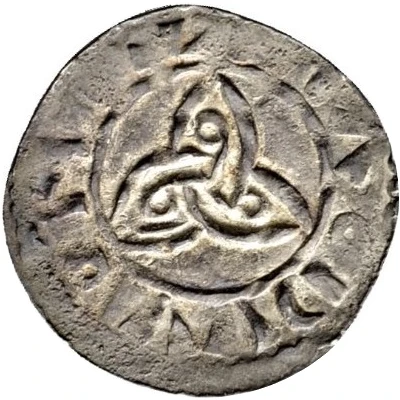
Reverse
Tribal celtic motif within inner circle, legend surrounding.
Script: Latin
Comment
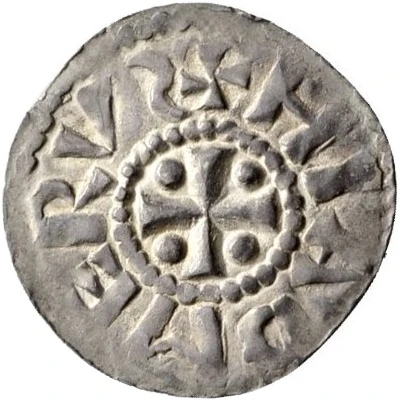
Count Thietmar was a brother of Duke Bernard II of Saxony. He was considered a benefactor of the Bremen Church. The characteristic image on his denarii is the triskel, supposed to symbolize the Christian Trinity.
Interesting fact
One interesting fact about the Standard circulation coin Denier - Thietmar ND (1004-1048) from Saxon Eastern March (German States) made of Silver weighing 1 g is that it was minted during the reign of Thietmar, who was the Margrave of the Saxon Eastern March from 1004 to 1048. This coin was used as a means of exchange and commerce during his rule, and it features an image of Thietmar on one side and a cross on the other. The use of silver in the coin's minting was a significant innovation at the time, as it was a more durable and valuable material than the copper or bronze coins that were previously used. This coin is now a rare and valuable collector's item, providing a glimpse into the economic and political history of the Saxon Eastern March during the early Middle Ages.