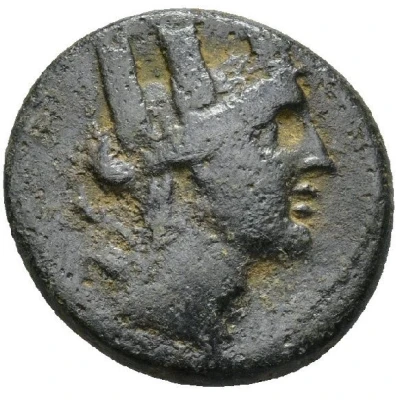
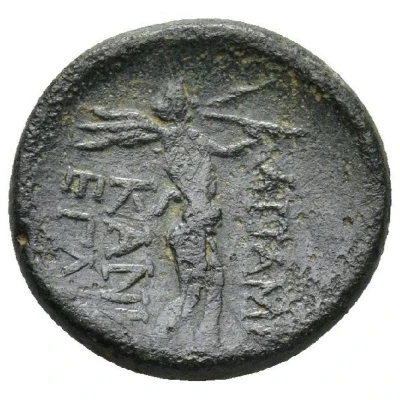
© N&N London (CC0)
© N&N London (CC0)
Chalkon - Kankaros & Eglo- 133 BC - 40 BC
| Bronze | 4.4 g | 17 mm |
| Issuer | Apameia (Phrygia) |
|---|---|
| Type | Standard circulation coin |
| Years | 133 BC - 40 BC |
| Value | Chalkon (1⁄48) |
| Currency | Drachm |
| Composition | Bronze |
| Weight | 4.4 g |
| Diameter | 17 mm |
| Shape | Round (irregular) |
| Technique | Hammered |
| Orientation | Variable alignment ↺ |
| Demonetized | Yes |
| Updated | 2024-10-10 |
| Numista | N#376323 |
|---|---|
| Rarity index | 92% |
Reverse
Marsyas walking right on maeander pattern, playing flute.
Script: Greek
Lettering:
AΠAME
KANKA[ROY]
EΓΛO?
Translation:
Apameia
Kankaros and Eglogistes (magistrate)
Comment
Magistrate name left of Marsyas - possibly short for Kankaros and Eglogistes … but just Egl?
Image courtesy of Bucephalus Numismatics (free internet domain claimed)
https://www.acsearch.info/search.html?id=9067869

Interesting fact
One interesting fact about this coin is that it features a unique blend of Greek and Persian influences in its design. The obverse side of the coin depicts the profile of a bearded king, likely Kankaros, while the reverse side shows a seated goddess, possibly Eglo-, surrounded by a crescent moon and a star. This fusion of Greek and Persian elements reflects the cultural exchange and blending that occurred during the Hellenistic period, making the coin a fascinating piece of history.