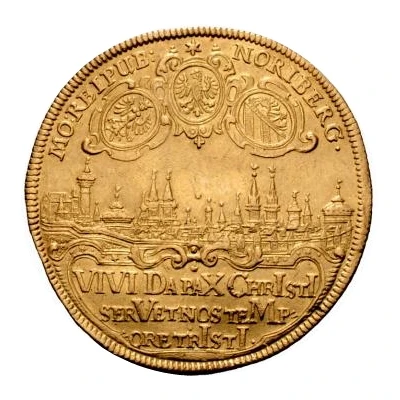
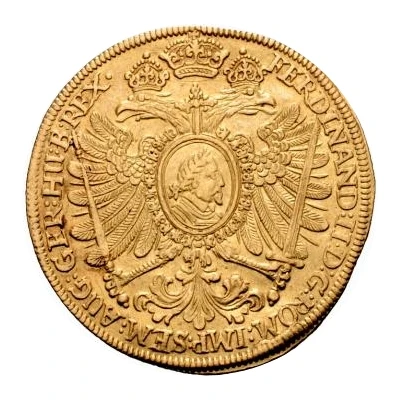
© Hess Divo
© Hess Divo
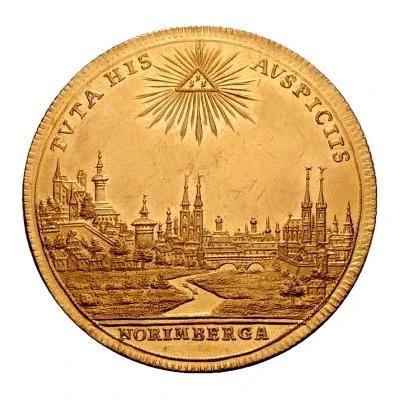
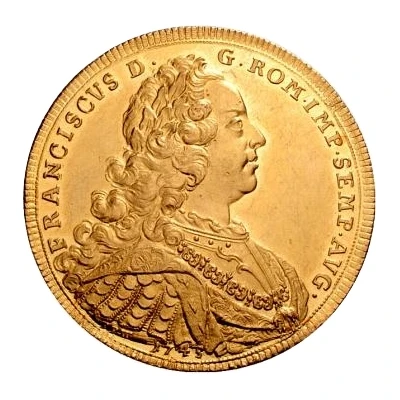
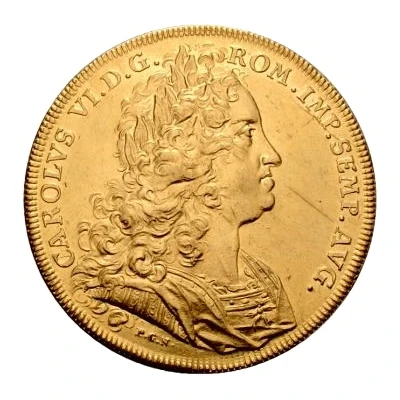
8 Ducats
1631 year| Gold (.986) | 27.37 g | 43 mm |
| Issuer | Free imperial city of Nuremberg (German States) |
|---|---|
| Period | Free City (1219-1806) |
| Emperor | Ferdinand II (1619-1637) |
| Type | Standard circulation coin |
| Year | 1631 |
| Value | 8 Ducats (8 Dukaten) (28) |
| Currency | Reichsguldiner (1620-1753) |
| Composition | Gold (.986) |
| Weight | 27.37 g |
| Diameter | 43 mm |
| Shape | Round |
| Demonetized | Yes |
| Updated | 2024-10-05 |
| Numista | N#132507 |
|---|---|
| Rarity index | 97% |
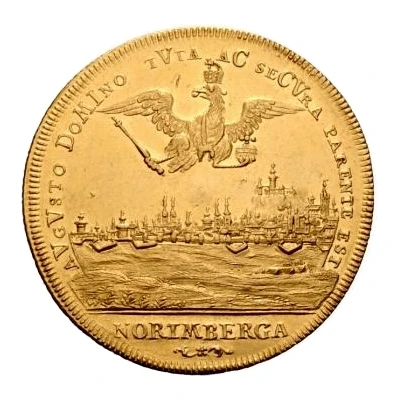
Reverse
Crowned imperial eagle with bust on breast.
Script: Latin
Interesting fact
One interesting fact about the 8 Ducats 1631 from Free imperial city of Nuremberg (German States) is that it was minted during a time when the city was an important center for trade and commerce in Europe. Nuremberg was a key stopover for merchants traveling between Italy and the northern European countries, and the city's mint was known for producing high-quality coins that were widely accepted and trusted throughout the region. The 8 Ducats coin, made of gold (.986) and weighing 27.37g, would have been a valuable and highly sought-after coin during its time, and it remains a prized collector's item for numismatists today.