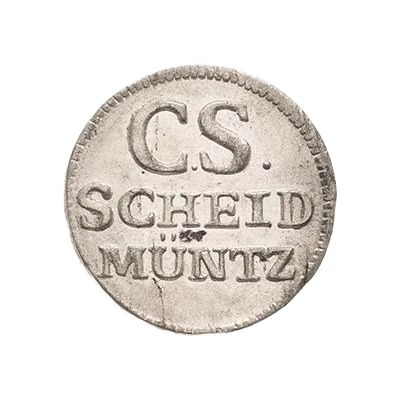
© Leipziger Münzhandlung und Auktion Manfred Höhn
© Leipziger Münzhandlung und Auktion Manfred Höhn
6 Pfennigs - Frederick August II
| Billon | - | - |
| Issuer | Electorate of Saxony (Albertinian Line) (German States) |
|---|---|
| Issuer | Electorate of Saxony (Albertinian Line) (German States) |
| Prince elector | Frederick Augustus II (Friedrich August II) (1733-1763) |
| Prince elector | Frederick Augustus II (Friedrich August II) (1733-1763) |
| Type | Standard circulation coin |
| Type | Standard circulation coin |
| Years | 1760-1763 |
| Years | 1760-1763 |
| Value | 6 Pfennigs (1⁄48) |
| Value | 6 Pfennigs (1⁄48) |
| Currency | Thaler (1493-1805) |
| Currency | Thaler (1493-1805) |
| Composition | Billon |
| Composition | Billon |
| Shape | Round |
| Shape | Round |
| Demonetized | Yes |
| Demonetized | Yes |
| Updated | 2024-10-05 |
| Numista | N#94271 |
|---|---|
| Rarity index | 89% |
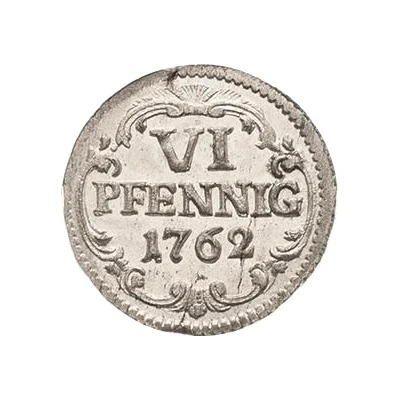
Reverse
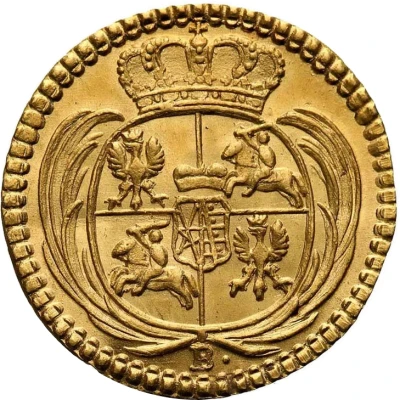
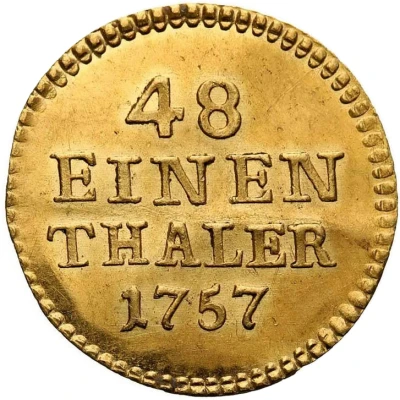
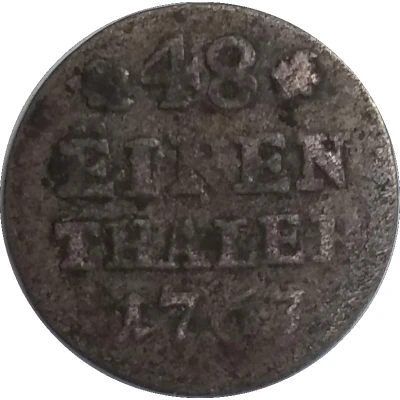
3-line inscription with denomination and date within rococo styled frame.
Script: Latin
Lettering:
VI
PFENNIG
1762
Interesting fact
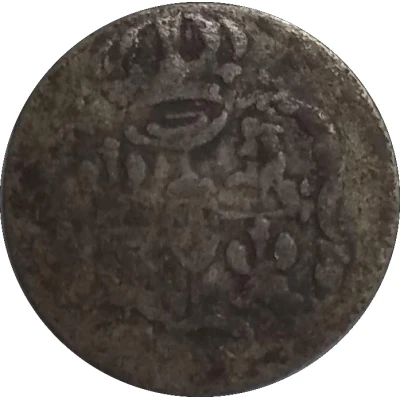
One interesting fact about the 6 Pfennigs coin from the Electorate of Saxony (Albertinian Line) is that it was made of Billon, which is an alloy of copper and silver. This was a common practice in the German States during the 18th century, as it allowed for the production of coins with a lower silver content, making them more affordable to produce and circulate. Despite being made of a less valuable metal, the coin still features a detailed design, including an image of Frederick August II on one side and the coat of arms of Saxony on the other. This coin is a great example of the craftsmanship and attention to detail that went into the production of coins during this time period.