© Willem63 (CC BY-NC-SA)
© Willem63 (CC BY-NC-SA)
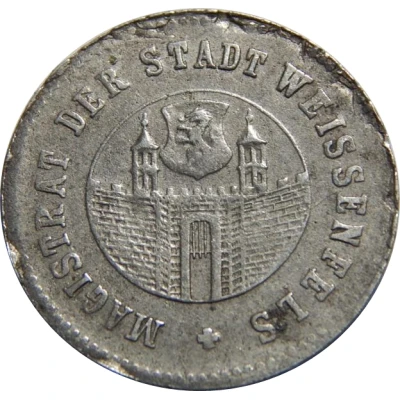
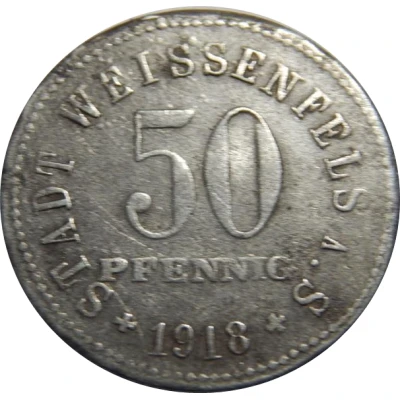
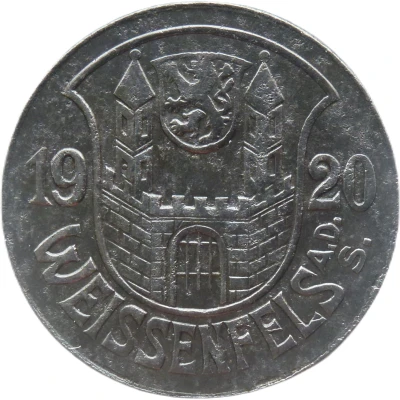
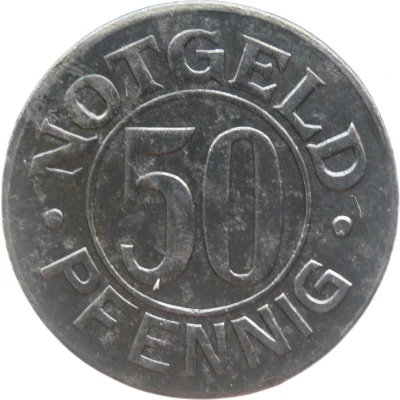
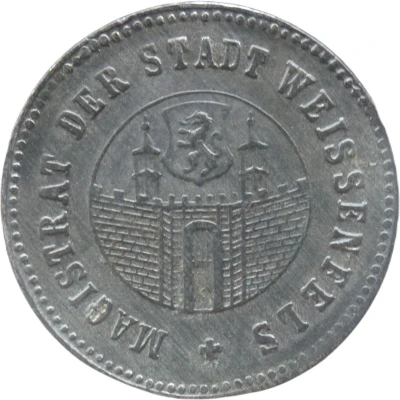
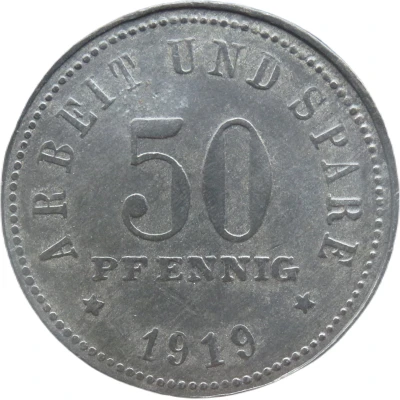
50 Pfennigs - Weissenfels an der Saale
1919 year| Zinc | 3.3 g | 24.2 mm |
| Issuer | City of Weißenfels (Prussian province of Saxony) |
|---|---|
| Period | Weimar Republic (1918-1933) |
| Type | Standard circulation coin |
| Year | 1919 |
| Value | 50 Pfennigs (50 Pfennige) (0.50) |
| Currency | Mark (1914-1924) |
| Composition | Zinc |
| Weight | 3.3 g |
| Diameter | 24.2 mm |
| Thickness | 1.4 mm |
| Shape | Round |
| Technique | Milled |
| Orientation | Medal alignment ↑↑ |
| Demonetized | Yes |
| Updated | 2024-10-04 |
| Numista | N#76956 |
|---|---|
| Rarity index | 86% |
Reverse
Pearl rim, legend surrounding denomination.
Script: Latin
Lettering:
ARBEIT UND SPARE
50
PFENNIG
★ 1919 ★
Edge
Plain
Comment
Funck old N°: 589.8 / Funck 2012: 589.9Interesting fact
The 50 Pfennigs coin from Weissenfels an der Saale, issued in 1919, features a unique design that sets it apart from other coins of its time. The obverse side of the coin depicts a stylized image of a castle, while the reverse side features a wreath of oak leaves surrounding the denomination. This design was created by the German artist and engraver, Georg Roth, and it gives the coin a distinctive look that collectors find appealing. Additionally, the fact that it was made of zinc and weighs only 3.3 grams makes it a notable example of coinage during the late German Empire period.