© Willem63 (CC BY-NC-SA)
© Willem63 (CC BY-NC-SA)
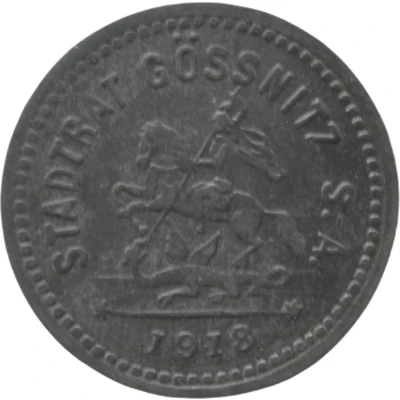
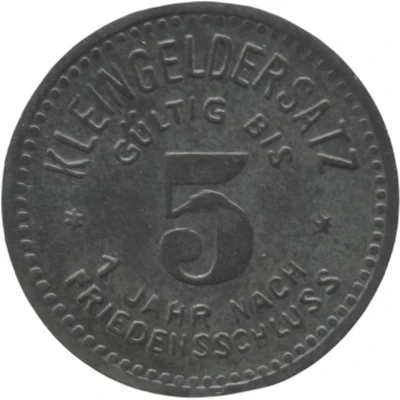
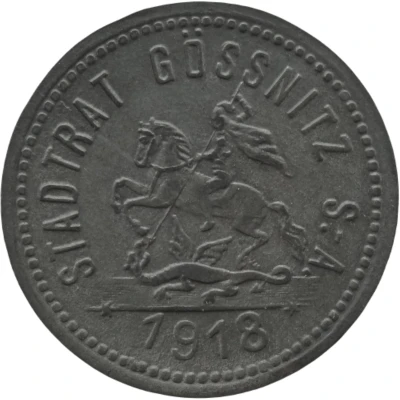
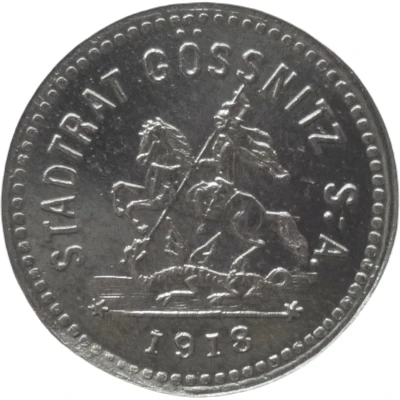
5 Pfennigs - Gössnitz
1918 year| Iron | 1.8 g | 17.3 mm |
| Issuer | City of Gößnitz (Saxe-Altenburg) (Federal state of Saxe-Altenburg) |
|---|---|
| Type | Standard circulation coin |
| Year | 1918 |
| Value | 5 Pfennigs (5 Pfennige) (0.05) |
| Currency | Mark (1914-1924) |
| Composition | Iron |
| Weight | 1.8 g |
| Diameter | 17.3 mm |
| Thickness | 1.2 mm |
| Shape | Round |
| Technique | Milled |
| Orientation | Medal alignment ↑↑ |
| Demonetized | Yes |
| Updated | 2024-10-04 |
| Numista | N#341193 |
|---|---|
| Rarity index | 94% |
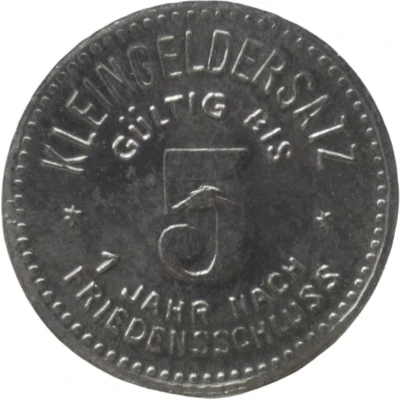
Reverse
Beaded rim, double line legend surrounding denomination centered
Script: Latin
Lettering:
KLEINGELDERSATZ
GÜLTIG BIS
5
1 JAHR NACH
FRIEDENSSCHLUSS
Edge
Plain
Interesting fact
One interesting fact about the 5 Pfennigs - Gössnitz 1918 coin is that it was issued during a time of economic turmoil in Germany, known as the "Inflationary Period" (1914-1923), when the value of the German mark plummeted, and the price of goods and services skyrocketed. To combat this, the government issued coins with lower denominations, like the 5 Pfennigs, to help people purchase everyday items. Despite its low value, this coin is a unique piece of history that reflects the economic challenges faced by Germany during that time.