© Willem63 (CC BY-NC-SA)
© Willem63 (CC BY-NC-SA)
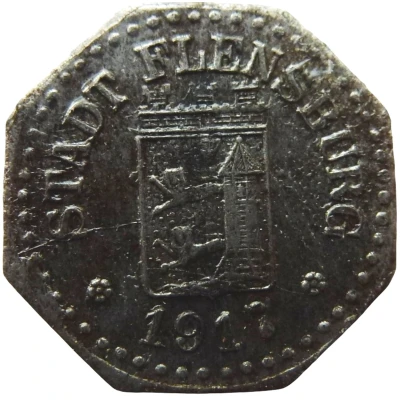
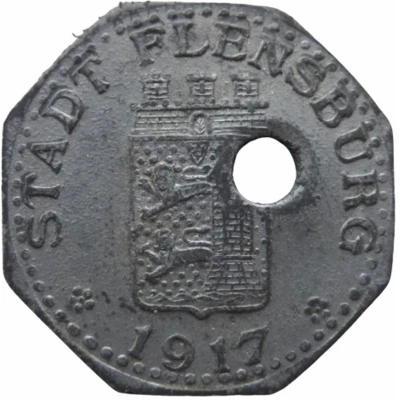
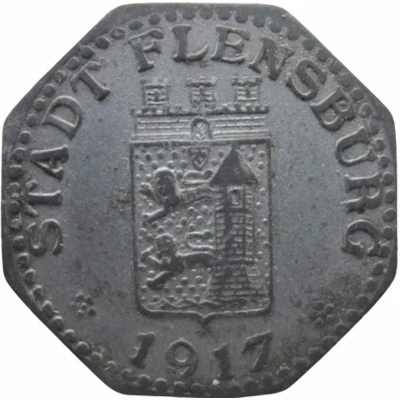
5 Pfennigs - Flensburg
1917 year| Nickel plated zinc | 1.7 g | 19.5 mm |
| Issuer | City of Flensburg (notgeld) (Prussian province of Schleswig-Holstein) |
|---|---|
| Emperor | William II (Wilhelm II) (1888-1918) |
| Type | Standard circulation coin |
| Year | 1917 |
| Value | 5 Pfennigs (5 Pfennige) (0.05) |
| Currency | Mark (1914-1924) |
| Composition | Nickel plated zinc |
| Weight | 1.7 g |
| Diameter | 19.5 mm |
| Thickness | 1.0 mm |
| Shape | Octagonal (8-sided) |
| Technique | Milled |
| Orientation | Medal alignment ↑↑ |
| Demonetized | Yes |
| Updated | 2024-10-04 |
| Numista | N#317564 |
|---|---|
| Rarity index | 90% |
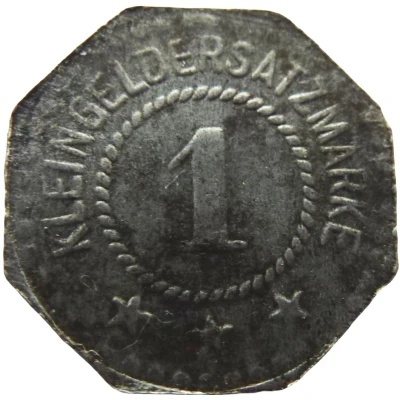
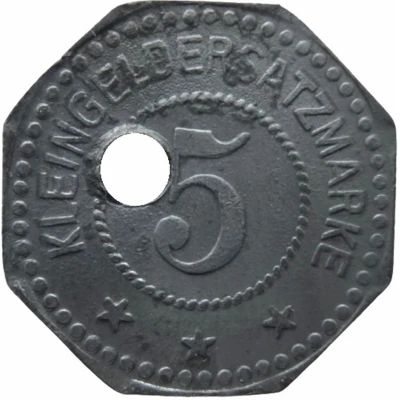
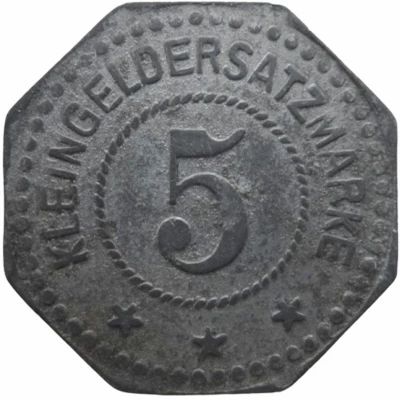
Reverse
Pearl rim, legend circling rope circle with denomination centered
Script: Latin
Lettering:
KLEINGELDERSATZMARKE
5
★ ★ ★
Edge
Plain
Interesting fact
One interesting fact about the 5 Pfennigs - Flensburg 1917 coin is that it was issued during a time of economic turmoil in Germany, specifically during the hyperinflation period of the early 1920s. The coin was minted as a replacement for the Papiermark, which had become virtually worthless due to rampant inflation. The 5 Pfennigs coin, made of nickel-plated zinc, was intended to stabilize the currency and restore confidence in the German economy. Despite its humble denomination, the coin has become a sought-after collector's item due to its historical significance and rarity.