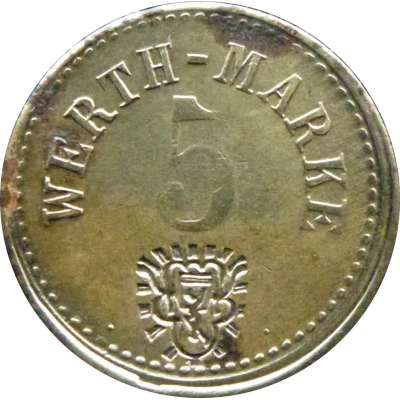
© Willem63 (CC BY-NC-SA)
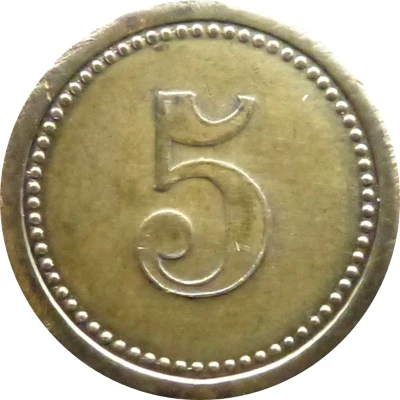
© Willem63 (CC BY-NC-SA)
5 Pfennigs - Erfurt (Reibstein) ND
| Copper plated zinc | 1.9 g | 18.0 mm |
| Issuer | City of Erfurt (notgeld) (Prussian province of Saxony) |
|---|---|
| Type | Standard circulation coin |
| Value | 5 Pfennigs (5 Pfennige) (0.05) |
| Currency | Mark (1914-1924) |
| Composition | Copper plated zinc |
| Weight | 1.9 g |
| Diameter | 18.0 mm |
| Thickness | 1.3 mm |
| Shape | Round |
| Technique | Milled, Countermarked |
| Orientation | Medal alignment ↑↑ |
| Demonetized | Yes |
| Updated | 2024-10-04 |
| Numista | N#321121 |
|---|---|
| Rarity index | 97% |
Reverse
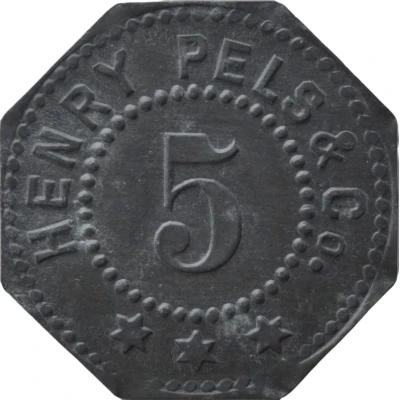
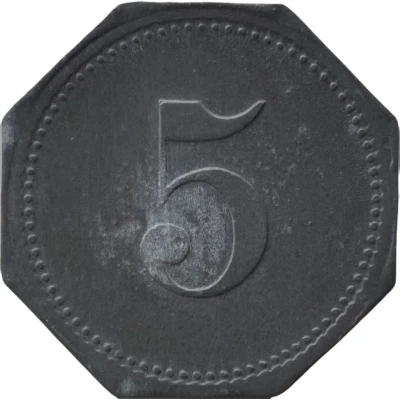
Pearl rim, with denomination centered
Script: Latin
Lettering: 5
Edge
Plain
Comment
Menzel: BBBInteresting fact
One interesting fact about the 5 Pfennigs - Erfurt (Reibstein) ND coin is that it was issued during a time of economic turmoil in Germany, specifically during the hyperinflation period of the 1920s. The coin was minted as a replacement for the Papiermark, which had become essentially worthless due to rampant inflation. The 5 Pfennigs coin, made of copper-plated zinc, was intended to be a more stable alternative and was used as a means of exchange in the city of Erfurt and the surrounding region. Despite its humble value, the coin remains a fascinating piece of history and a testament to the economic challenges faced by Germany during that time.