© Fritz Rudolf Künker GmbH & Co. KG, Osnabrück and Lübke & Wiedemann KG, Leonberg
© Fritz Rudolf Künker GmbH & Co. KG, Osnabrück and Lübke & Wiedemann KG, Leonberg
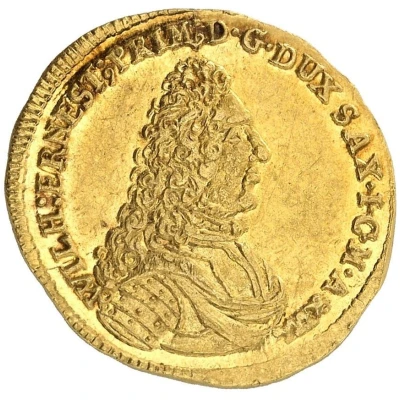
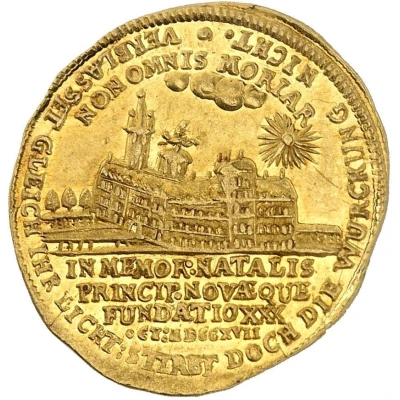
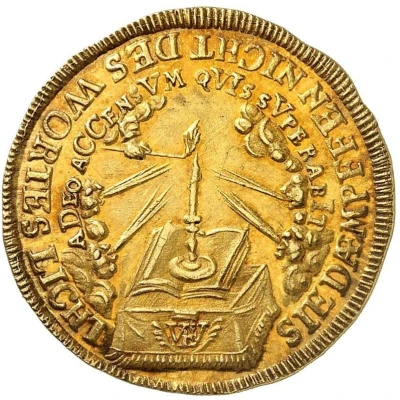
2 Ducats - William Ernest Bicentenary of the Reformation
1717 year| Gold (.986) | 6.88 g | - |
| Issuer | Duchy of Saxe-Weimar (German States) |
|---|---|
| Issuer | Duchy of Saxe-Weimar (German States) |
| Duke | William Ernest (Wilhelm Ernst) (1683-1728) |
| Duke | William Ernest (Wilhelm Ernst) (1683-1728) |
| Type | Circulating commemorative coin |
| Type | Circulating commemorative coin |
| Year | 1717 |
| Year | 1717 |
| Value | 2 Ducats (7) |
| Value | 2 Ducats (7) |
| Currency | Thaler (1572-1740) |
| Currency | Thaler (1572-1740) |
| Composition | Gold (.986) |
| Composition | Gold (.986) |
| Weight | 6.88 g |
| Weight | 6.88 g |
| Shape | Round |
| Shape | Round |
| Orientation | Medal alignment ↑↑ |
| Orientation | Medal alignment ↑↑ |
| Demonetized | Yes |
| Demonetized | Yes |
| Updated | 2024-10-05 |
| Numista | N#268786 |
|---|---|
| Rarity index | 97% |
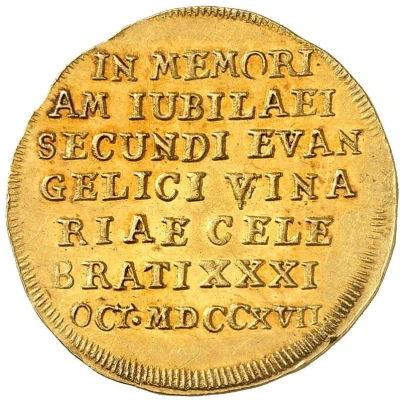
Reverse
7-line inscription roman numeral date
Script: Latin
Lettering: IN MEMORI / AM IUBILAEI / SECUNDI EVAN / GELICI VINA / RIAE CELE / BRATI XXXI / OCT . MDCCXVII
Interesting fact
One interesting fact about this coin is that it was minted to commemorate the 200th anniversary of the Reformation, which was a significant event in European history that marked the split between Protestantism and Catholicism. The coin features an image of William Ernest, the Duke of Saxe-Weimar, who was a prominent figure during the Reformation. The coin's design and the fact that it was made of gold, a valuable and durable metal, reflect the importance and significance of the event it commemorates.