© Hess Divo
© Hess Divo
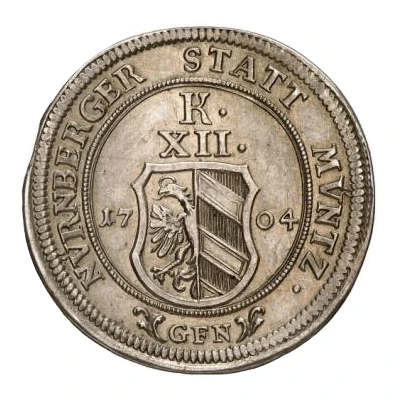
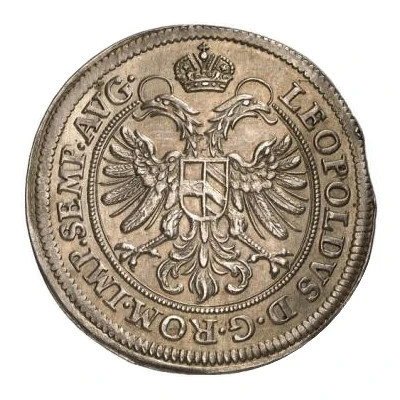
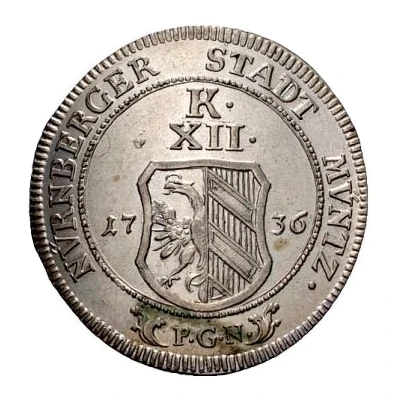
12 Kreuzer
| Silver | 5.37 g | 30 mm |
| Issuer | Free imperial city of Nuremberg (German States) |
|---|---|
| Period | Free City (1219-1806) |
| Emperor | Charles VI (Karl VI) (1711-1740) |
| Type | Standard circulation coin |
| Years | 1732-1736 |
| Value | 12 Kreuzers (0.2) |
| Currency | Reichsguldiner (1620-1753) |
| Composition | Silver |
| Weight | 5.37 g |
| Diameter | 30 mm |
| Shape | Round |
| Demonetized | Yes |
| Updated | 2024-10-05 |
| Numista | N#132144 |
|---|---|
| Rarity index | 97% |
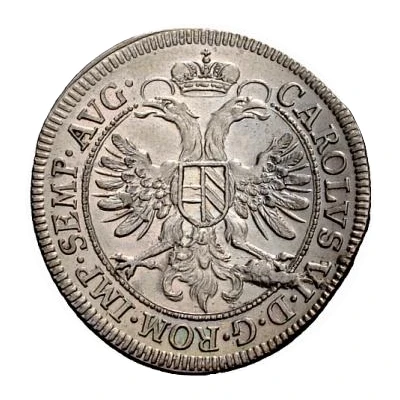
Reverse
Crowned imperial eagle, arms on chest.
Script: Latin
Interesting fact
The 12 Kreuzer coin from Nuremberg was minted during a time of great economic and political change in Europe. The coin was issued during the reign of Emperor Charles VI, who was trying to centralize power and create a more standardized system of currency across the Holy Roman Empire. The 12 Kreuzer coin was one of the first coins to be minted with a standardized weight and purity, which made it an important step towards creating a more modern monetary system.