© Willem63 (CC BY-NC-SA)
© Willem63 (CC BY-NC-SA)
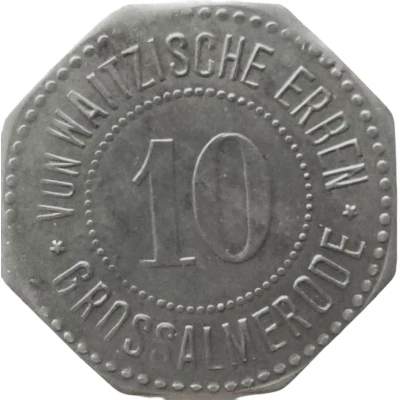
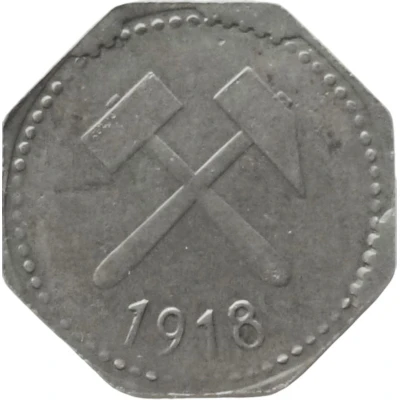
10 Pfennigs - Grossalmerode von Waitzische Erben
1918 year| Iron | 2.6 g | 20.8 mm |
| Issuer | City of Großalmerode (Prussian province of Hesse-Nassau) |
|---|---|
| Type | Standard circulation coin |
| Year | 1918 |
| Value | 10 Pfennigs (10 Pfennige) (0.10) |
| Currency | Mark (1914-1924) |
| Composition | Iron |
| Weight | 2.6 g |
| Diameter | 20.8 mm |
| Thickness | 1.2 mm |
| Shape | Octagonal (8-sided) |
| Technique | Milled |
| Orientation | Medal alignment ↑↑ |
| Demonetized | Yes |
| Updated | 2024-10-04 |
| Numista | N#338590 |
|---|---|
| Rarity index | 97% |
Reverse
Pearl rim, with crossed hammers centered
Script: Latin
Lettering: 10
Edge
Plain
Comment
Menzel: BBBFa: Braunkohlenindustrie
Interesting fact
One interesting fact about the 10 Pfennigs - Grossalmerode (von Waitzische Erben) 1918 coin is that it was made of iron, which was a unusual material for coins at that time, as most coins were made of gold, silver, or copper. The use of iron in coinage was often seen as a sign of economic hardship or war-time scarcity, as it was a cheaper and more readily available material than precious metals. This coin's iron composition is a reflection of the economic challenges faced by Germany during World War I.