© Leipziger Münzhandlung und Auktion Manfred Höhn
© Leipziger Münzhandlung und Auktion Manfred Höhn
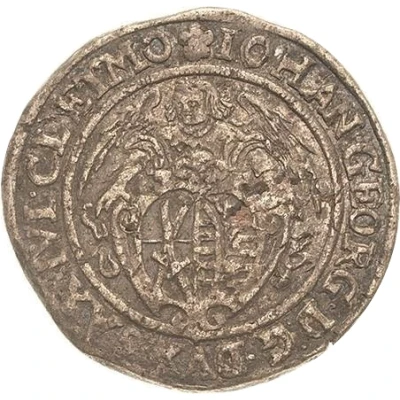
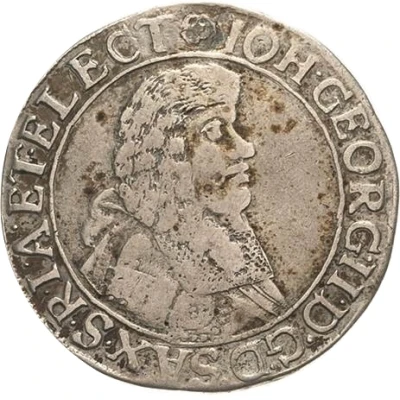
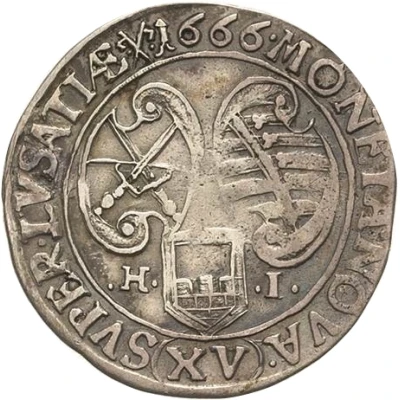
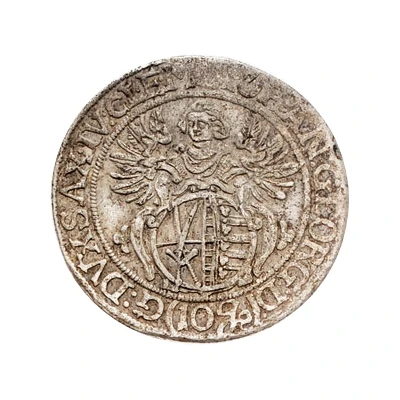
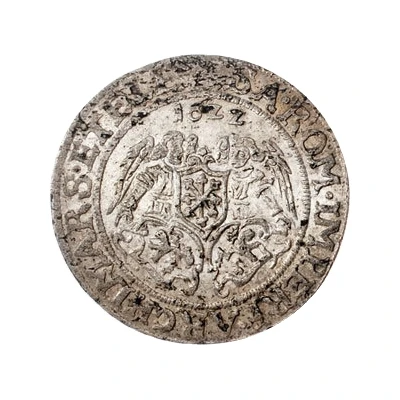
10 Groschen - John George I
| Silver | - | - |
| Issuer | Electorate of Saxony (Albertinian Line) (German States) |
|---|---|
| Issuer | Electorate of Saxony (Albertinian Line) (German States) |
| Prince elector | John George I (Hans Georg I) (1591-1656) |
| Prince elector | John George I (Hans Georg I) (1591-1656) |
| Type | Standard circulation coin |
| Type | Standard circulation coin |
| Years | 1622-1623 |
| Years | 1622-1623 |
| Value | 10 Groschens (⅙) |
| Value | 10 Groschens (⅙) |
| Currency | Thaler (1493-1805) |
| Currency | Thaler (1493-1805) |
| Composition | Silver |
| Composition | Silver |
| Shape | Round |
| Shape | Round |
| Demonetized | Yes |
| Demonetized | Yes |
| Updated | 2024-10-05 |
| Numista | N#187390 |
|---|---|
| Rarity index | 100% |
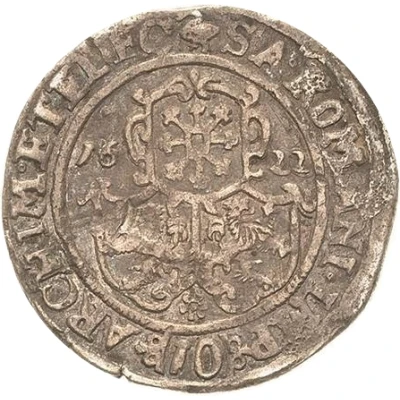
Reverse
Date above two cherungs and three arms.
Script: Latin
Interesting fact
One interesting fact about the 10 Groschen coin from the Electorate of Saxony (Albertinian Line) is that it was minted during a time of great economic and political change in Europe. The Thirty Years War, which lasted from 1618 to 1648, had a significant impact on the coinage of many German states, including Saxony. The coin's silver content was likely a reflection of the economic instability of the time, as many countries were struggling to maintain the value of their currencies. Despite these challenges, the 10 Groschen coin remains a valuable and sought-after collector's item today, with some examples selling for thousands of dollars at auction.