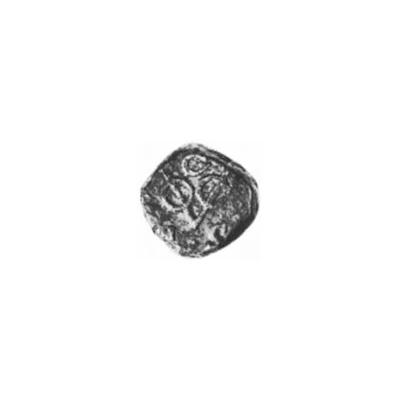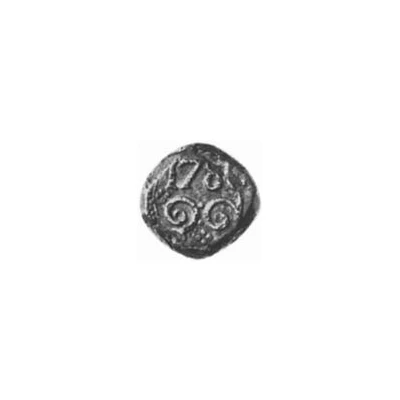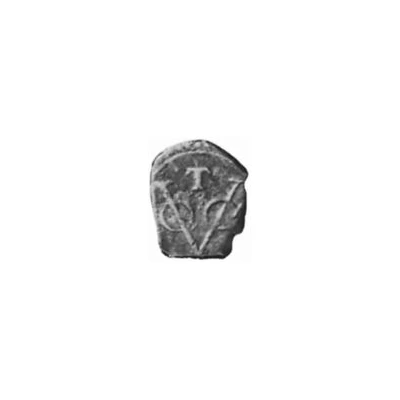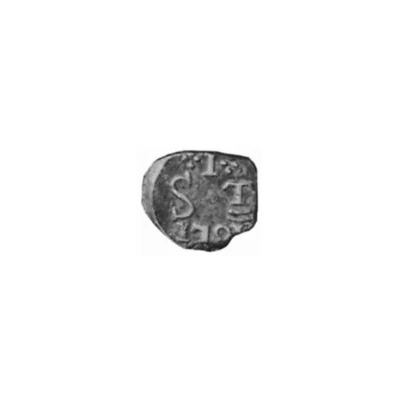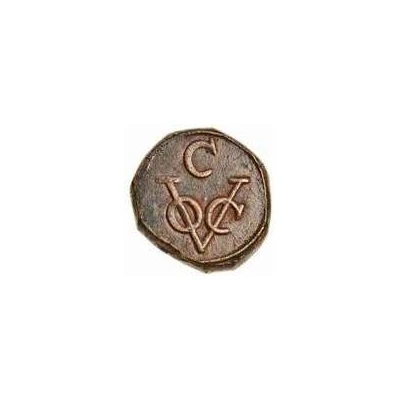
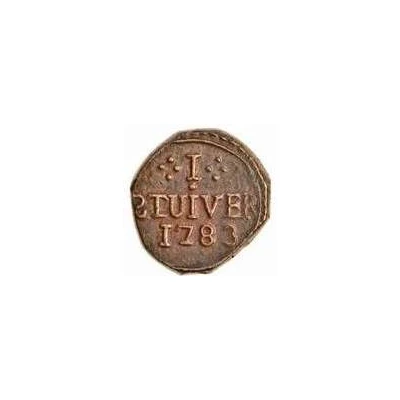
1 Stuiver
| Copper | 13.76 g | 18 mm |
| Issuer | Sri Lanka › Ceylon (1597-1972) |
|---|---|
| Period | Dutch occupation (1640-1802) |
| Type | Standard circulation coin |
| Years | 1783-1795 |
| Value | 1 Stuiver |
| Currency | Stuiver (1660-1796) |
| Composition | Copper |
| Weight | 13.76 g |
| Diameter | 18 mm |
| Thickness | 4.0 mm |
| Shape | Round |
| Orientation | Coin alignment ↑↓ |
| Demonetized | Yes |
| Updated | 2024-10-07 |
| Numista | N#15735 |
|---|---|
| Rarity index | 68% |
Reverse
Lettering and date
Lettering:
*I*
STUIVER
1783
Edge
Plain
Comment
Coins similar to those minted in Jaffna were minted in Trincomalee, Colombo and Galle as well and they bear the letters T, C and G respectively as mint marks.Interesting fact
The 1 Stuiver coin from Sri Lanka, also known as Ceylon, is interesting because it was used as a form of currency during the Dutch colonial period. The coin was first introduced in 1783 and was used until 1795, making it a significant piece of history for the country. Additionally, the coin was made of copper, which was a common material for coins at the time, and it weighed 13.76 grams, which is relatively heavy for a coin of its size.