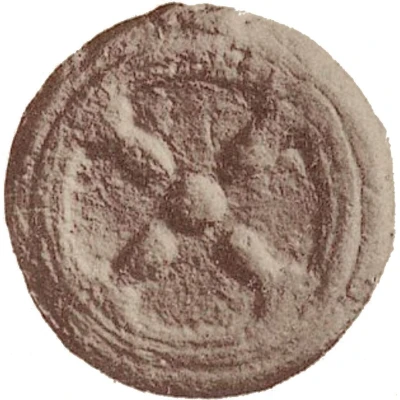
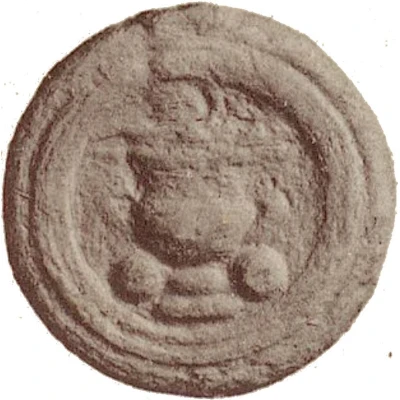
© Ernst Haeberlin; 1910. "Aes Grave". Joseph Baer, Frankfurt, Germany (CC0)
© Ernst Haeberlin; 1910. "Aes Grave". Joseph Baer, Frankfurt, Germany (CC0)
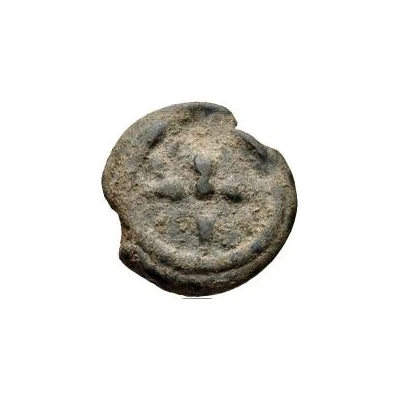
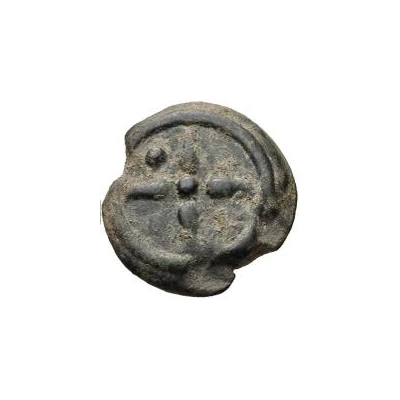
1 Sextans Wheel / Krater 240 BC - 225 BC
| Bronze | 31.16 g | 35 mm |
| Issuer | Uncertain Etruscan mint (Etruria) |
|---|---|
| Type | Standard circulation coin |
| Years | 240 BC - 225 BC |
| Value | 1 Sextans = ⅙ As |
| Currency | As (circa 301-201 BC) |
| Composition | Bronze |
| Weight | 31.16 g |
| Diameter | 35 mm |
| Shape | Round (irregular) |
| Technique | Cast |
| Demonetized | Yes |
| Updated | 2024-10-09 |
| Numista | N#179019 |
|---|---|
| Rarity index | 100% |
Reverse
Krater with two dots below.
Edge
Plain
Interesting fact
One interesting fact about this coin is that it features a unique blend of Etruscan and Greek influences in its design. The obverse side of the coin depicts a wheel or krater, which is a common Etruscan motif, while the reverse side features a depiction of a satyr, which is a common Greek motif. This blending of cultural influences reflects the complex history and cultural exchange that took place in the region during this time period.