© noumea
© noumea
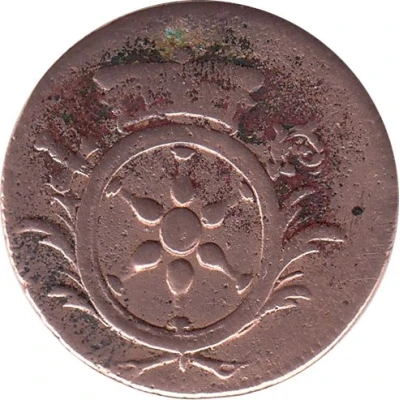
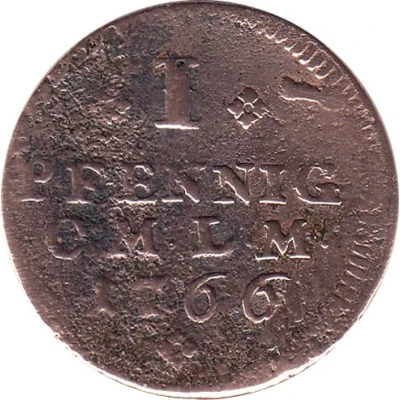
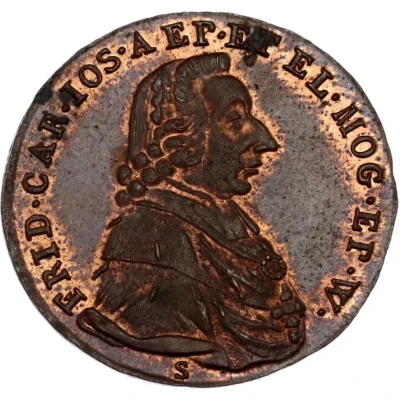
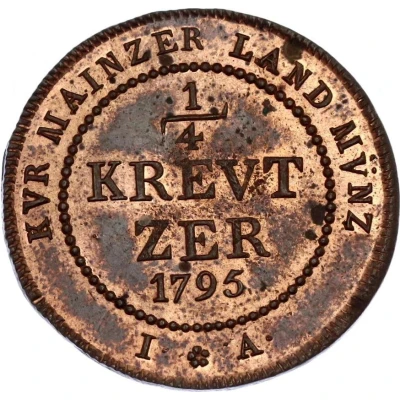
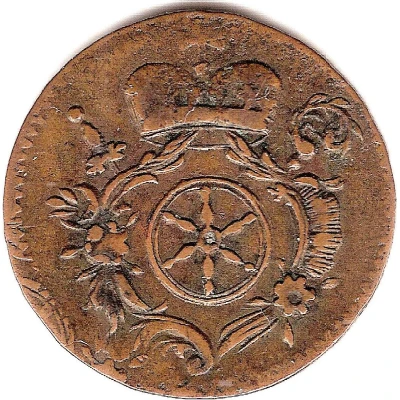
1 Pfennig - Frederick Charles Joseph of Erthal
| Copper | - | 21.5 mm |
| Issuer | Archbishopric of Mainz (German States) |
|---|---|
| Prince-archbishop | Frederick Charles Joseph of Erthal (Friedrich Karl Joseph von Erthal) (1774-1802) |
| Type | Standard circulation coin |
| Years | 1779-1781 |
| Value | 1 Pfennig (1⁄576) |
| Currency | Conventionsthaler (1764-1803) |
| Composition | Copper |
| Diameter | 21.5 mm |
| Thickness | 1.4 mm |
| Shape | Round |
| Orientation | Medal alignment ↑↑ |
| Demonetized | Yes |
| Updated | 2024-10-05 |
| Numista | N#31664 |
|---|---|
| Rarity index | 91% |
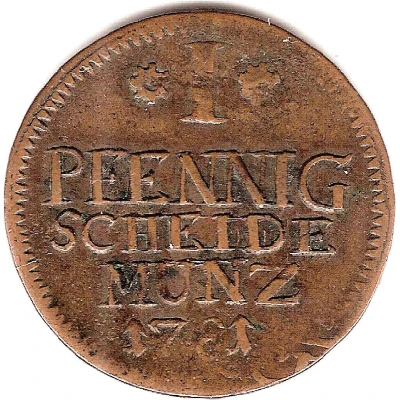
Reverse
Script: Latin
Lettering:
I
PFENNIG
SCHEIDE
MUNZ
1781
Interesting fact
The 1 Pfennig coin from the Archbishopric of Mainz, featuring Frederick Charles Joseph of Erthal, was minted during a time of great economic and political change in Germany. The coin was issued during the reign of Frederick Charles Joseph, who was the Prince-Elector and Archbishop of Mainz from 1779 to 1781. This was a period of Enlightenment and intellectual curiosity, and the coin reflects this spirit of progress and innovation. The use of copper as the material for the coin was a deliberate choice, as it was a more affordable and accessible metal than other options, such as gold or silver. This made the coin more accessible to a wider range of people, which aligns with the Enlightenment values of equality and progress.