© Aquistapace
© Aquistapace
¼ Unit 200 BC - 101 BC
| Copper | 2.37 g | 16 mm |
| Issuer | Ebusus (Punic Iberia) |
|---|---|
| Type | Standard circulation coin |
| Years | 200 BC - 101 BC |
| Value | ¼ Unit |
| Currency | Unit (2nd century BC) |
| Composition | Copper |
| Weight | 2.37 g |
| Diameter | 16 mm |
| Thickness | 1.4 mm |
| Shape | Round (irregular) |
| Technique | Hammered |
| Orientation | Variable alignment ↺ |
| Demonetized | Yes |
| Updated | 2024-10-09 |
| Numista | N#288248 |
|---|---|
| Rarity index | 93% |
Reverse
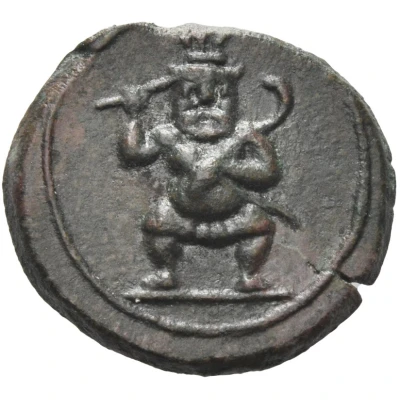
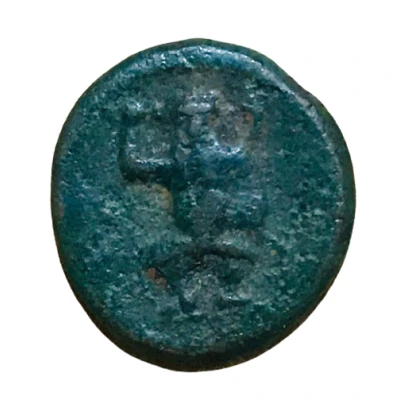
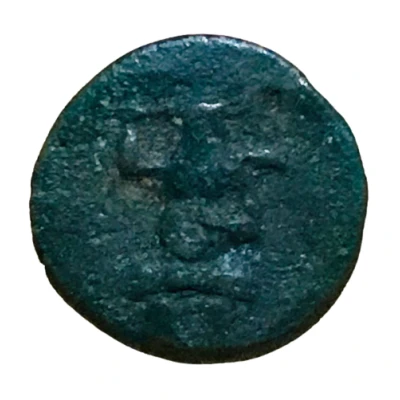
Front-facing Bes standing.
Interesting fact
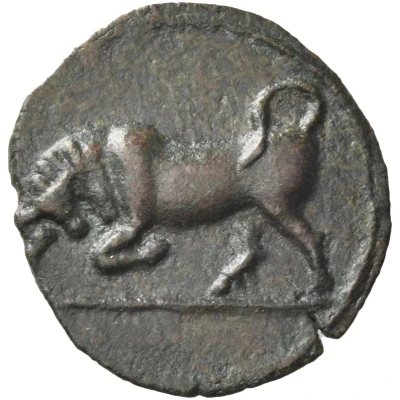
The Ebusus quarter unit coin was used in Punic Iberia, which is now modern-day Spain and Portugal, during the 3rd century BC. The coin features a unique blend of Phoenician and indigenous Iberian influences, reflecting the cultural exchange and fusion that occurred during the Punic period. The coin's design includes a stylized image of a horse, which was an important symbol in ancient Iberian culture, and the reverse side features a pattern of circles and dots that may have represented a form of ancient writing or numerals.