© SanglierFSE
© SanglierFSE
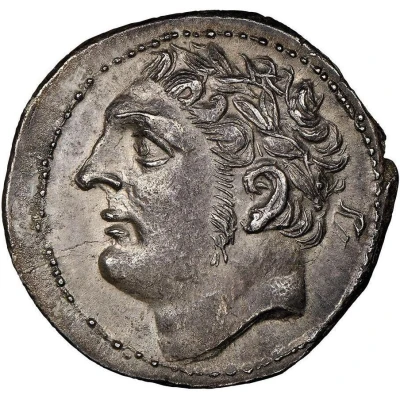
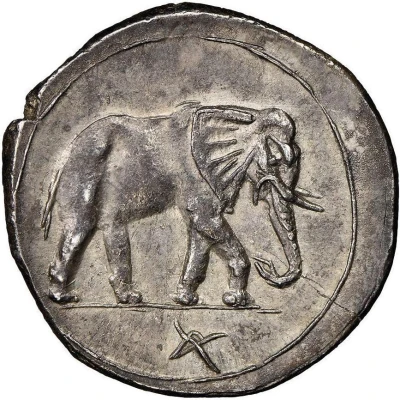
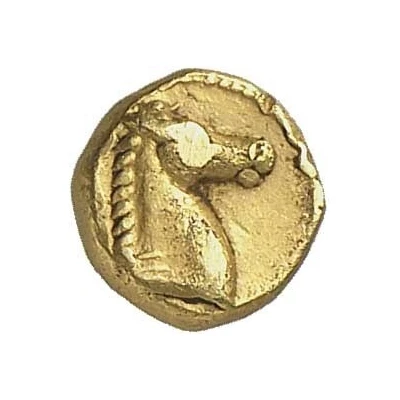
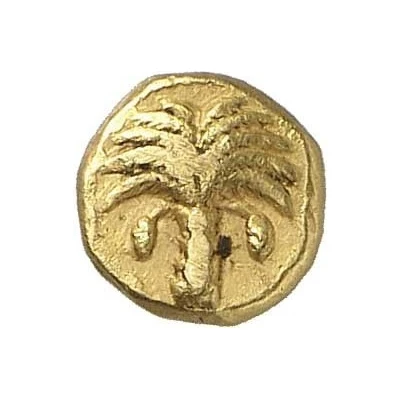
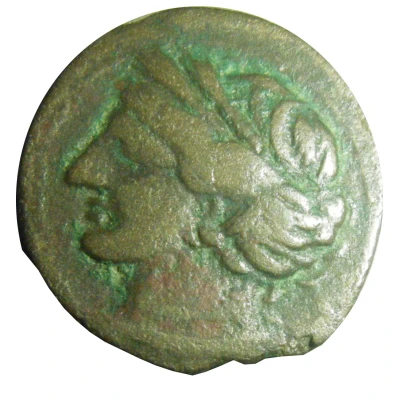
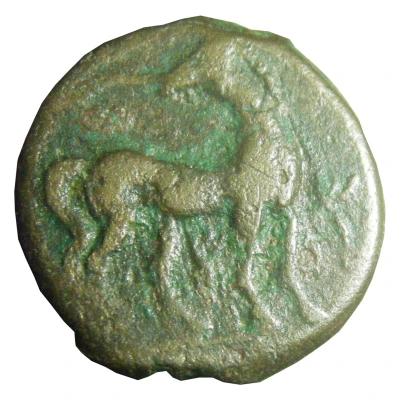
Æ Shekel Carthage 215 BC - 201 BC
| Copper | 6.7 g | 24 mm |
| Issuer | Carthage (Zeugitana) |
|---|---|
| Type | Standard circulation coin |
| Years | 215 BC - 201 BC |
| Value | 1 Shekel |
| Currency | Shekel |
| Composition | Copper |
| Weight | 6.7 g |
| Diameter | 24 mm |
| Thickness | 1 mm |
| Shape | Round (irregular) |
| Technique | Hammered |
| Orientation | Medal alignment ↑↑ |
| Demonetized | Yes |
| Updated | 2024-10-09 |
| Numista | N#48858 |
|---|---|
| Rarity index | 76% |
Reverse
Horse standing right on exergual line with head turned left, palm tree in background, star in right field
Interesting fact
The Æ Shekel coin from Carthage was used as a form of currency during the 3rd century BC, and its design featured the image of a dolphin, which was a symbol of the city of Carthage. The use of the dolphin image on the coin was meant to signify the city's connection to the sea and its importance as a trading hub in the Mediterranean region.