© Nomos AG
© Nomos AG
Æ 350 BC - 300 BC
| Bronze | 3.64 g | 17 mm |
| Issuer | Laos (Lucania) |
|---|---|
| Type | Standard circulation coin |
| Years | 350 BC - 300 BC |
| Currency | As |
| Composition | Bronze |
| Weight | 3.64 g |
| Diameter | 17 mm |
| Shape | Round (irregular) |
| Technique | Hammered |
| Orientation | Variable alignment ↺ |
| Demonetized | Yes |
| Updated | 2024-10-10 |
| Numista | N#396444 |
|---|---|
| Rarity index | 97% |
Reverse
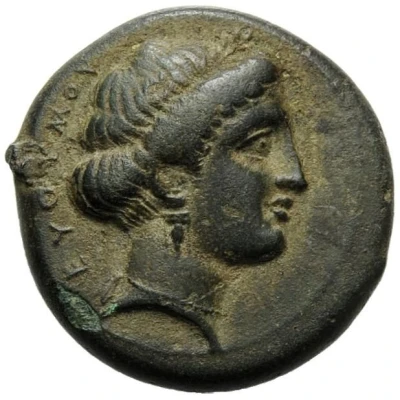
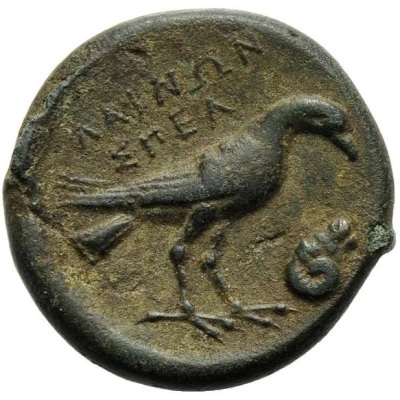
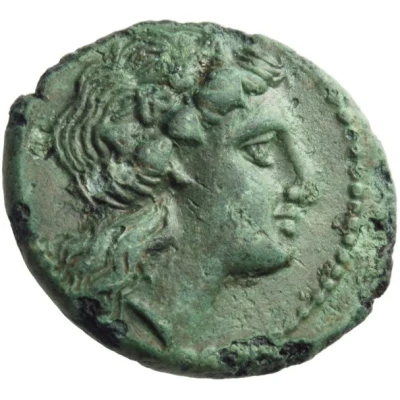
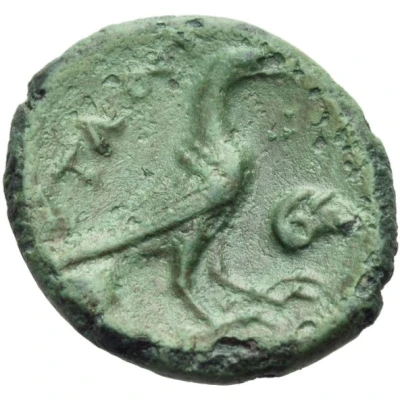
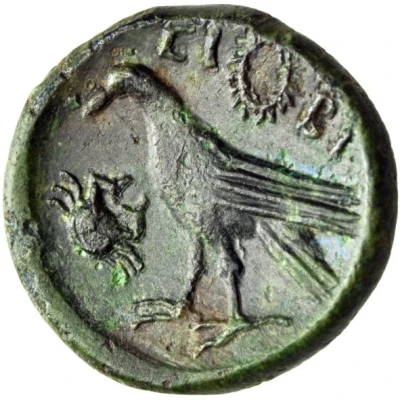
Crow standing to left with closed wings; above left, wreath between ϹΙ - ΒΙ; in the field to left, crab.
Script: Greek
Lettering: ϹΙ - ΒΙ
Comment
Magistrate Vibius.
Interesting fact
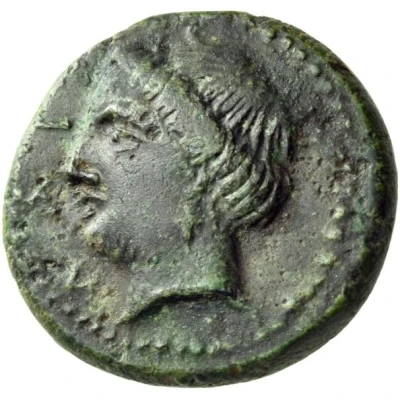
The Æ coin from Laos (Lucania) was used as a form of currency in the ancient Greek city of Lucania, which is now modern-day Basilicata, Italy. The coin features the image of a bull on one side and the Greek god Apollo on the other. The use of bronze in the coin's construction was a common practice during this time period, as it was a durable and accessible material for coinage. The coin's weight of 3.64 grams is also notable, as it suggests that it was a relatively small coin, making it easy to handle and transport. Overall, this coin provides a fascinating glimpse into the economic and cultural practices of ancient Greece and its influence on other regions.
Price
| Date | Mintage | VG | F | VF | XF | AU | UNC |
|---|---|---|---|---|---|---|---|
| ND (350 BC - 300 BC) | - | - | - | - | - | - |
Values in the table are based on evaluations by sales realized on Internet platforms. They serve as an indication only for Æ (350 BC - 300 BC) coin.